
Voluntary carbon market explained: what went wrong and what buyers need to check in 2026
The voluntary carbon market grew quickly, lost trust after the 2023 credit-quality crisis, and is now being rebuilt around stricter claims, better ratings and Article 6 accounting.
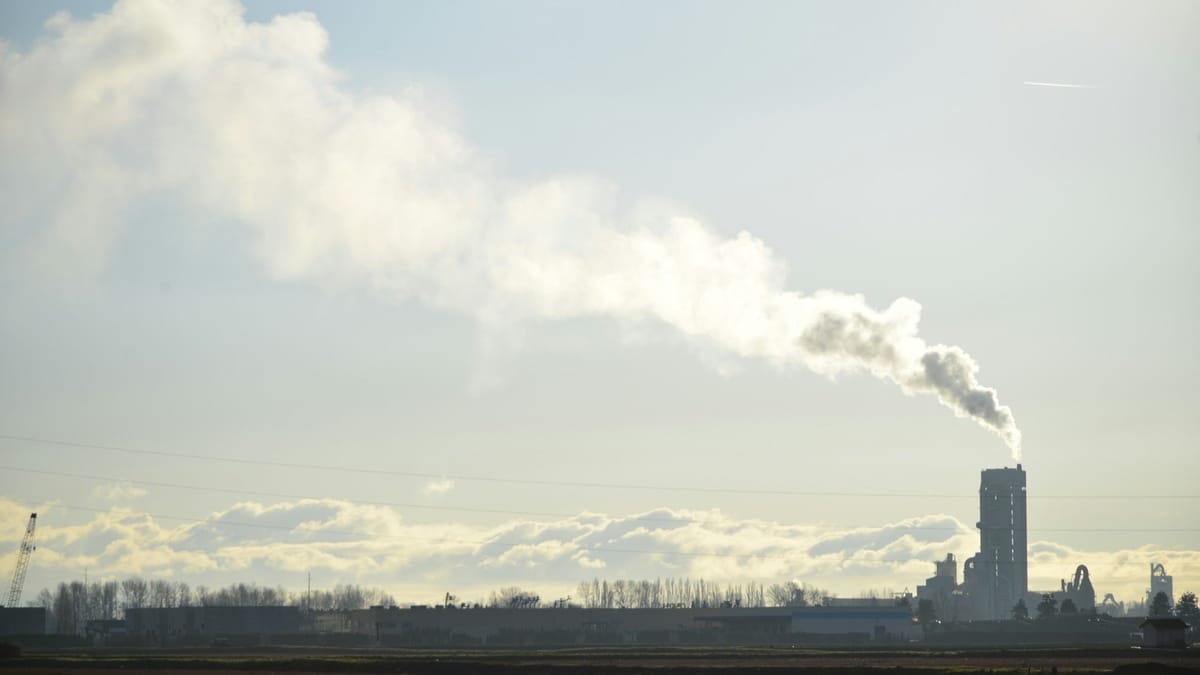
The voluntary carbon market grew quickly, lost trust after the 2023 credit-quality crisis, and is now being rebuilt around stricter claims, better ratings and Article 6 accounting. The result is not one clean market, but a split market where the credit you buy determines the claim you can safely make.
Data checked June 2026. Voluntary carbon market prices, credit ratings and regulatory frameworks can change quickly. Check current registry, credit quality, claims code, aviation and host-country information before relying on any credit for procurement, compliance or public claims.
For related reading, see our guides to how carbon credits work, carbon credit retirement evidence, ICVCM and CCP labels, VCMI Claims Code explained, CORSIA explained, Article 6 of the Paris Agreement, carbon offsetting for UK businesses and what is greenwashing.
In January 2023, a joint investigation by The Guardian, Die Zeit and SourceMaterial alleged that many rainforest credits issued under Verra's Reducing Emissions from Deforestation and Forest Degradation (REDD+) methodologies did not represent the emissions reductions claimed. Verra disputed the conclusions and challenged the methodology. The scientific debate over REDD+ baselines, counterfactual deforestation and project-level impact did not end there, but the market reaction was immediate.
Corporate buyers became more cautious. Carbon-neutral product claims attracted more scrutiny. Cheap avoidance credits lost some of the confidence that had supported them during the 2020 to 2021 boom. At the same time, the market did not disappear. It started to split.
By 2026, the voluntary carbon market (VCM) is better understood as two overlapping markets. One market is made up of higher-integrity credits with stronger methodology approval, clearer claims guidance, Article 6 authorisation or independent quality ratings. The other is made up of legacy or lower-confidence credits that may still be verified under private standards, but cannot support the same claims without more risk. Understanding which market you are buying from is now the most important question in voluntary carbon credit procurement.
Quick answer
| Question | Short answer |
|---|---|
| What is the voluntary carbon market? | The market through which companies, governments and individuals voluntarily buy carbon credits to fund emissions reductions or removals outside their own operations. |
| What is a carbon credit? | A certified reduction or removal of one tonne of carbon dioxide equivalent, usually recorded in a registry and retired when used for a claim. |
| What changed after 2023? | Buyers became more cautious about avoided-deforestation credits, carbon-neutral claims and low-priced credits with weak evidence. |
| What is ICVCM? | The Integrity Council for the Voluntary Carbon Market, which assesses programmes and credit categories against its Core Carbon Principles. |
| What is the Voluntary Carbon Markets Integrity Initiative? | The Voluntary Carbon Markets Integrity Initiative, which focuses on what claims companies can credibly make when using carbon credits. |
| Are ICVCM, CORSIA and Article 6 the same? | No. They answer different questions about quality, aviation eligibility and international carbon accounting. |
Do not confuse the main systems
The voluntary market now sits alongside compliance systems such as the EU ETS (European Union Emissions Trading System), the UK ETS (UK Emissions Trading Scheme) and CORSIA (Carbon Offsetting and Reduction Scheme for International Aviation). It also overlaps with Article 6 of the Paris Agreement. These systems are related, but they are not interchangeable.
| System | What it answers | What it does not answer |
|---|---|---|
| ICVCM Core Carbon Principles | Does a crediting programme or category meet a voluntary quality benchmark? | Whether the credit is automatically eligible for CORSIA or Article 6 use. For the detail, read ICVCM and CCP labels explained. |
| VCMI Claims Code | Can a company make a specific voluntary climate claim using credits? | Whether a credit is legally eligible for an aviation compliance scheme. |
| Article 6 authorisation | Has a host country authorised international use and avoided double counting with its own climate target? | Whether the credit is necessarily high quality on its own. |
| CORSIA eligibility | Can an airline use the unit for covered aviation emissions under International Civil Aviation Organization rules? | Whether a non-airline buyer can safely make a public marketing claim. |
| Independent ratings | What does an independent rater think about project quality, additionality and risk? | Regulatory approval, legal eligibility or permission to make a specific claim. |
The key point is that a premium credit is not one that has passed a single combined test. It is one where the buyer understands which of these frameworks it has and has not passed, and what claim that permits.
How a voluntary credit works
The VCM is the market through which entities voluntarily purchase carbon credits. Unlike compliance markets, most VCM buyers are not required by law to participate. Companies enter it because of net zero commitments, supply-chain expectations, investor pressure, customer-facing claims or a desire to finance mitigation beyond their own value chain.
A carbon credit represents a verified reduction or removal of one tonne of carbon dioxide equivalent (CO2e), certified under a methodology and recorded in a registry. The word "verified" is doing a lot of work. It raises the central quality questions: which standard, which methodology, which auditor, which baseline, which permanence mechanism and which claim?
| Stage | What happens |
|---|---|
| Project design | The developer designs an emissions reduction or removal activity and selects a methodology. |
| Validation | An independent assessor checks whether the project design meets the standard's rules. |
| Monitoring | The developer tracks actual outcomes during the crediting period. |
| Verification | An independent verifier confirms the monitored outcomes. |
| Issuance | The registry issues credits based on verified reductions or removals. |
| Retirement | The buyer permanently cancels credits in the registry so they cannot be reused. |
| Claim | The buyer makes a claim based on the retired credits and the evidence behind them. |
The retirement step matters because it is where the credit leaves the market. A credit that has not been retired in a recognised registry cannot support a credible claim. The dedicated carbon credit retirement evidence guide explains how serial numbers, beneficiary details, vintage and claim wording should connect.
Why the market grew so quickly
The VCM grew as corporate net zero commitments expanded after the Paris Agreement. Businesses wanted a way to address emissions they could not yet eliminate, especially Scope 3 emissions in supply chains and product use. A carbon credit offered an apparently simple unit: one tonne bought, one tonne claimed.
The underlying theory is not irrational. Some emissions reductions or removals need extra finance. Carbon markets can channel private capital into forest conservation, methane capture, clean cookstoves, biochar, reforestation and engineered carbon removal. At their best, voluntary credits finance mitigation that would not otherwise happen.
The weakness was that buyers often treated very different credits as if they were equivalent. A low-cost avoided-emissions credit, a forest protection credit, a household-energy credit and a durable engineered-removal credit all carried the same headline unit: one tonne. The market's language made them look more comparable than they really were.
What went wrong
The 2023 REDD+ investigation exposed the central weakness. Avoided-deforestation projects depend on a counterfactual: what would have happened to the forest without the carbon project? If that baseline is too pessimistic, the project can issue more credits than the real emissions reduction justifies.
Verra disputed the investigation's conclusions and argued that the studies used in the reporting were not appropriate for assessing project-specific REDD+ impact. That dispute matters, and the article should not be reduced to "all rainforest credits are worthless". REDD+ remains a broad category with different project designs, geographies and methodologies.
But the market reaction still revealed a structural problem. Buyers had been relying too heavily on standard approval as a quality signal. They were not always assessing additionality, permanence, leakage, safeguards, baseline assumptions and retirement evidence at project level.
Additionality
Additionality asks whether the emissions reduction would have happened without carbon finance. A project that would have been built anyway should not receive credits for ordinary commercial activity. This is simple in principle and difficult in practice, because it often depends on policy, local economics, technology costs and counterfactual modelling.
Permanence
Permanence asks whether the climate benefit will last. A tonne of fossil carbon emitted into the atmosphere can remain there for a very long time. A forest carbon credit can be reversed by fire, disease, illegal clearing or climate stress. Buffer pools reduce this risk, but they do not remove it.
Leakage
Leakage asks whether emissions are simply displaced. If protecting one forest pushes deforestation into a nearby area, the claimed reduction may be overstated. Leakage is especially important for land-use projects and commodity-linked deforestation risks.
Claims risk
Even a real mitigation outcome can be used in a misleading claim. A company that buys credits while doing little to cut its own emissions may still create greenwashing risk. That is why claims frameworks now matter almost as much as credit-quality frameworks.
The rebuild: four forces reshaping the market
1. ICVCM and the Core Carbon Principles
The Integrity Council for the Voluntary Carbon Market (ICVCM) was created to establish a quality benchmark for voluntary carbon credits. Its Core Carbon Principles (CCPs) cover governance, tracking, transparency, validation and verification, additionality, permanence, quantification, double counting, safeguards and net zero transition.
ICVCM does not approve every credit individually. It assesses carbon-crediting programmes and categories of credits. Once a programme is eligible under the Core Carbon Principles and a category is approved, qualifying credits can carry a CCP label through participating registries.
As of the ICVCM assessment table last updated on 11 May 2026, 41 methodologies were listed as approved under the Core Carbon Principles. That is important progress, but it is not the same as saying the whole voluntary carbon market has passed a quality test. Buyers still need to check the specific credit, vintage, methodology and registry status.
2. Voluntary Carbon Markets Integrity Initiative claims discipline
The Voluntary Carbon Markets Integrity Initiative (VCMI) answers a different question from ICVCM. ICVCM focuses on credit quality. VCMI focuses on claims: what a company can credibly say after using credits. For the detail, read VCMI Claims Code explained.
VCMI's Claims Code provides a structure for Carbon Integrity Claims, including Silver, Gold and Platinum claims that recognise increasing levels of climate action. The basic direction is clear: credits should sit alongside science-aligned emissions cuts, not replace them.
This matters because a bad claim can damage a good credit. A company may fund real mitigation, but still overstate its own progress if it describes credit purchases as proof that its product, event or business is "carbon neutral" without clear evidence and context.
3. Article 6 and corresponding adjustments
Article 6 of the Paris Agreement creates the accounting framework for internationally transferred mitigation outcomes. If a host country authorises a credit for international use and applies a corresponding adjustment, the same reduction should not also be counted toward the host country's own national target.
This does not mean every voluntary credit needs an Article 6 authorisation. But it does mean buyers need to understand whether they are making a contribution claim, a voluntary offset claim, a claim linked to CORSIA or a national-accounting-sensitive claim. Article 6 has made double counting much harder to ignore.
4. CORSIA demand
CORSIA is not the voluntary carbon market. It is a global aviation offsetting scheme administered through the International Civil Aviation Organization (ICAO). But it overlaps with the VCM because airlines may use eligible emissions units issued by approved crediting programmes.
International Air Transport Association (IATA) guidance says 130 states are participating in CORSIA as of 1 January 2026. It also states that, as of April 2026, ten countries had supplied CORSIA Eligible Emissions Units through the issuance of a Letter of Authorisation (LoA). That limited LoA supply is one reason aviation-linked demand could create a premium for authorised, eligible credits.
The split market in 2026
The rebuild has produced a market with at least three practical tiers. These categories are not official labels, but they are useful for understanding buyer risk.
| Credit type | What it may offer | Main buyer risk |
|---|---|---|
| Credits with multiple quality signals | Potential combination of CCP approval, strong independent rating, Article 6 authorisation or CORSIA eligibility. | Limited supply, higher price and the need to verify each specific framework status. |
| Credits approved under the Core Carbon Principles without Article 6 authorisation | A stronger voluntary quality signal than ordinary private-standard credits. | May not support all claims and may not resolve national-level double-counting questions. |
| Private-standard credits without current higher-integrity labels | Registry-backed credits that may still fund useful mitigation. | Wider quality variation, higher claims risk and greater need for project-level diligence. |
The price signal is also splitting. Higher-confidence credits, especially durable removals and credits that meet multiple quality filters, can trade at a clear premium to lower-confidence avoidance credits. Exact prices vary by vintage, project type, contract structure, registry, rating and claim use, so buyers should treat generic "price per tonne" comparisons with caution.
Market signals to watch
The most useful way to track the VCM is not to ask whether "carbon credits" are rising or falling as a single market. The better question is which parts of the market are gaining credibility, which are losing buyer confidence, and which are becoming harder to access.
| Signal | Why it matters | What to check |
|---|---|---|
| Retirement volumes | Retirements show credits actually being used for claims, not just issued or held in inventories. | Registry retirement data by project type, vintage and buyer category. |
| Issuance trends | Issuance shows supply, but high issuance does not automatically mean strong demand or high quality. | New credits issued by standard, methodology, region and vintage. |
| CCP approvals | Core Carbon Principles approval is becoming one of the clearest voluntary quality filters. | ICVCM assessment status for programmes, categories and methodologies. |
| CORSIA eligibility and Letters of Authorisation | Aviation compliance demand can create pressure on a narrower pool of eligible, authorised units. | ICAO eligibility documents, IATA updates and host-country Letters of Authorisation. |
| Removal credit pricing | Durable and nature-based removals can price very differently from avoidance credits. | Project type, durability, registry status, rating and delivery risk. |
| Claims enforcement | Weak carbon-neutral language can reduce demand for credits that cannot support strong claims. | CMA, ASA, FCA and VCMI guidance on climate claims. |
This is where the market is becoming more useful to track. A fall in low-confidence retirements may look negative in aggregate data, while rising demand for credits approved under the Core Carbon Principles, units eligible under CORSIA or removal credits can still signal a healthier market underneath.
What this means for climate finance
Carbon markets matter for climate finance because they are one of the places where climate claims, regulation and investable demand meet. A sustainable fund, green bond, climate-transition strategy or carbon-credit investment product can all be affected by the quality of the underlying carbon market story.
For investors and climate-finance readers, the first lesson is that voluntary carbon credits are not a single clean asset class. Low-confidence avoidance credits, higher-integrity nature-based credits, durable removal credits and units linked to CORSIA can have different drivers, risks and buyer bases. Frontier carbon removal is a useful example because it shows how future-delivery demand can matter even before most contracted tonnes have been delivered. Treating all of these signals as one price series can hide the most important information.
The second lesson is that policy can change value. Article 6 authorisation, CORSIA eligibility, host-country accounting and claims guidance can all affect whether a credit is useful to a particular buyer. A credit can be real and still be commercially less valuable if it cannot support the claim or compliance use the buyer needs.
The third lesson is caution. Retail exposure to carbon credits is still complex, quality-sensitive and often illiquid. For background on the investment angle, read our guide to carbon credits as an investment. For broader context, see our explainers on sustainable funds, green bonds vs ESG funds and Article 6 of the Paris Agreement.
What claims credits can and cannot support
The highest-risk part of the market is not always the credit itself. It is the claim attached to the credit.
| Claim type | What it tries to say | Safer framing |
|---|---|---|
| Carbon neutral product | The product's emissions have been balanced by credits. | Explain the measured footprint, reduction work and the specific credits retired. |
| Offsetting claim | Credits compensate for a defined footprint. | State the quantity retired, standard, methodology, vintage and registry evidence. |
| Contribution claim | The buyer funded mitigation beyond its own value chain. | Describe the funding contribution without implying the buyer's own emissions have disappeared. |
| Residual emissions neutralisation | Remaining emissions are addressed after deep reductions. | Use only after clear emissions cuts and with credits suitable for the claim being made. |
In the UK, weak environmental claims can attract scrutiny from the Competition and Markets Authority (CMA) or the Advertising Standards Authority (ASA). Where claims are attached to financial products or regulated communications, the Financial Conduct Authority (FCA) may also matter. The stronger the claim, the more precise the evidence needs to be.
Buyer checklist
1. Registry evidence
Can you find the credit in a recognised registry? Does the registry show the project, vintage, serial number and retirement status? If the credit cannot be traced, it should not support a public claim.
2. Standard and methodology
Which standard certified the project? Which methodology was used? Is that methodology current, revised, rejected, approved under the Core Carbon Principles or still under assessment?
3. Vintage
When was the credit issued? Older vintages may have been generated under rules that no longer meet current market expectations.
4. Project type
Is the project avoiding emissions, reducing emissions or removing carbon from the atmosphere? Durable removals, nature-based removals and avoided-emissions credits carry different permanence and claims issues.
5. Additionality
What is the evidence that the project would not have happened without carbon finance? If the answer is generic, the risk is higher.
6. Permanence and reversals
For nature-based projects, what happens if the carbon benefit is reversed by fire, disease, illegal clearing or other events? Is there a buffer pool? Has the project had previous reversals?
7. Host-country treatment
If the credit is being used for CORSIA or an Article 6-sensitive claim, has the host country issued a Letter of Authorisation and applied the necessary accounting treatment?
8. Independent assessment
Has an independent rating provider assessed the project? Ratings are not perfect, but they can reveal risks that a simple registry listing does not show.
9. Claim fit
Does the credit actually support the claim you want to make? A credit can be useful for a contribution claim while still being unsuitable for a carbon-neutral product claim.
What this means for buyers, airlines and developers
Corporate buyers
The era of buying generic credits and making broad carbon-neutral claims is fading. Buyers need to connect three things: the emissions inventory, the credit evidence and the claim wording. A credit purchase without a claims strategy is now a governance risk, not just a sustainability expense.
Airlines
Airlines need to treat CORSIA eligibility as a separate test. A high-quality voluntary credit is not automatically usable for aviation compliance. A credit eligible under CORSIA still needs scrutiny around project quality, host-country authorisation and timing.
Project developers
The market is rewarding evidence. Developers that can demonstrate additionality, permanence, safeguards, transparent monitoring and claims usability are better placed than those relying on old assumptions about cheap volume. CCP approval, Article 6 readiness and clear documentation are becoming commercial assets.
What to watch next
- ICVCM assessment updates: more programme and category decisions will affect which credits can carry a stronger quality signal.
- VCMI claims adoption: if large companies use VCMI claims in reporting, procurement expectations could tighten further.
- Article 6 authorisations: more host-country Letters of Authorisation would expand the pool of credits suitable for certain international uses.
- CORSIA Phase 2: aviation demand from 2027 could increase pressure on eligible credit supply.
- UK claims enforcement: CMA and ASA action will shape how confidently consumer-facing companies use offsetting language.
Key takeaway
The voluntary carbon market is no longer one market. It is a segmented market where quality evidence, claims discipline, Article 6 accounting and CORSIA eligibility determine what a credit is worth and what it can safely support.
Voluntary carbon market FAQ
Is the voluntary carbon market dead?
No. It is more cautious than it was during the 2021 boom, but demand has not disappeared. The market is shifting toward clearer evidence, stronger claims discipline and higher-quality credit types.
Are all REDD+ credits bad?
No. REDD+ covers different geographies, methodologies and project designs. The problem is that avoided-deforestation credits depend heavily on baseline assumptions, leakage assessment and permanence controls. Buyers need project-level diligence.
Are removals always better than reductions?
Not automatically. Durable removals can be valuable, but they can also be expensive, small in supply and technologically immature. A high-quality reduction credit may be more defensible than a weak removal claim. The credit type must match the claim.
Does a CCP label mean a credit is safe for any claim?
No. A CCP label is a quality signal. It does not by itself decide whether a company can make a specific claim, whether the credit is eligible under CORSIA or whether Article 6 authorisation is present.
Should companies stop using carbon credits?
Not necessarily. Credits can help finance mitigation outside a company's own operations, but they should sit after emissions measurement and reduction, and the claim should be precise about what has been funded.