
Loss and Damage Fund explained: how the first $250m funding round works
Loss and Damage Fund explained: who can apply, what the first $250m funding round covers, how money is approved and what COP31 must show.
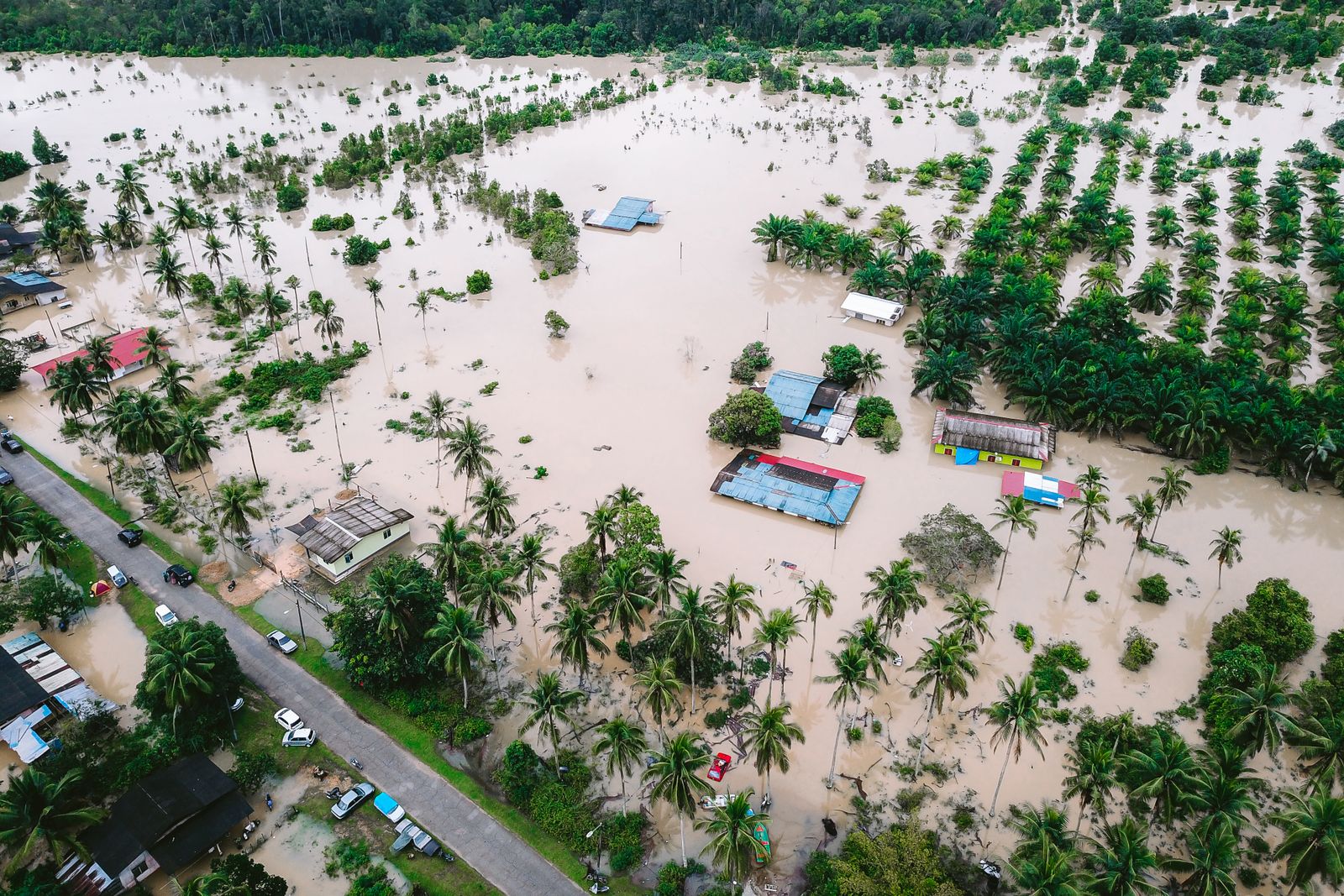
Governments have pledged $822.06 million to the Fund for responding to Loss and Damage. Its first operational funding envelope is $250 million. Whether that money becomes useful depends on who can apply, which activities qualify and how quickly approved requests are paid.
The Loss and Damage Fund has crossed an important threshold. It is no longer only an agreement to create a fund. A first call for country-led funding requests has closed, formal access routes exist, and the Board has begun considering projects.
That does not mean $822 million has been distributed. Climate-finance announcements pass through several stages, and each stage answers a different question.
Four numbers describe four different stages
| Figure | What it means | What it does not mean |
|---|---|---|
| $822.06m pledged | Total pledges reported by the fund as of 15 March 2026, from 27 partners. | Not all pledged money is automatically available for immediate project payments. |
| $250m allocated | The envelope set aside for the first interventions during the 2025 to 2026 start-up phase. | It is not a record of approved or completed projects. |
| $5m to $20m per request | The normal funding range under the first call for requests. | A request within the range is not guaranteed approval. |
| 50% minimum floor | At least half of the first funding envelope is reserved for small island developing states and least developed countries. | It does not limit the fund only to those two country groups. |
The fund says 24 of its 27 partners had signed contribution agreements and begun transferring money by March 2026. That is more concrete than a pledge alone. The next evidence is further down the chain: Board approval, legal agreements, disbursement and results in affected countries.
What counts as loss and damage?
Loss and damage describes climate harm that has not been avoided through emissions reduction or prevented through adaptation. It can follow an extreme event such as a cyclone, flood or heatwave, or a slow-onset change such as sea-level rise, salinisation, desertification or glacier loss.
Some losses are economic. Homes, roads, crops, businesses and public infrastructure can be damaged or destroyed. Other losses are not easily priced: lives, health, cultural heritage, territory, ecosystems, community ties and the ability to remain in a place.
The boundaries overlap with adaptation, disaster risk reduction and humanitarian relief, but the purposes differ.
| Finance area | Primary job | Example |
|---|---|---|
| Mitigation | Reduce or avoid greenhouse gas emissions. | Replace fossil-fuel generation with clean electricity. |
| Adaptation | Reduce exposure or vulnerability before harm occurs. | Strengthen flood protection before the next storm. |
| Humanitarian response | Meet urgent needs during and immediately after a crisis. | Emergency shelter, food, water and medical support. |
| Loss and damage | Respond to climate harm that has occurred or can no longer be avoided. | Recovery, reconstruction, relocation or support for slow-onset losses. |
A project may cross those boundaries. Rebuilding a road after a flood can restore a damaged service while making it more resilient to the next event. The fund's criteria allow recovery and reconstruction while asking whether the activity fills a genuine gap rather than duplicating another institution's work.
Who can access the fund?
The fund is intended to assist developing countries that are particularly vulnerable to the adverse effects of climate change. Under the first funding window, all developing countries considered particularly vulnerable are eligible to seek support.
The first window is called the Barbados Implementation Modalities. It is a start-up phase designed to fund initial interventions and test how the long-term fund should operate. The call opened on 15 December 2025 and closed on 15 June 2026.
Requests must be country-led. A national authority or focal point originates or endorses the proposal. Multi-country requests need endorsement from each participating country.
The public pipeline shows why that requirement matters. Some submissions remained outside the formal pipeline because they lacked a national endorsement letter or were submitted through an entity that was not on the fund's eligible access list. A technically relevant project is not enough if the country-ownership and access requirements are missing.
The three access routes
The start-up phase provides three intended routes.
Direct budget support through a national government
This is the most direct route, but its detailed procedures have remained under development. Requests using it can only be approved once the Board adopts the necessary operating rules.
Budget support with an eligible multilateral development bank
A country can seek direct budget support in partnership with a development bank that meets the fund's requirements. This route combines country control with an institution able to manage financial and safeguard processes.
Access through an accredited entity
A country can work with an organisation already accredited to the Adaptation Fund, Global Environment Facility or Green Climate Fund. The fund lists 172 accredited access entities and 116 national focal points.
Using existing accreditation can speed up a new fund's launch because it avoids rebuilding every institutional assessment from the beginning. It can also reproduce familiar access problems if countries must depend on an external entity, prepare complex documents or wait through several layers of review. The unfinished national direct-access route is therefore an important part of the fund's longer-term credibility.
What can the first funding round pay for?
Eligible activities include economic and non-economic loss and damage associated with extreme weather and slow-onset events. The published criteria include:
- recovery, reconstruction and rehabilitation after climate-related harm;
- activities that complement immediate humanitarian action;
- responses to sea-level rise and other slow-onset changes;
- support for displacement, relocation and migration where climate impacts make mobility necessary;
- national loss-and-damage response plans and improved climate information;
- institutional capacity needed to reach and manage funding.
The fund assesses whether the request responds to a priority gap, fits national needs, reaches vulnerable people and contributes to longer-term response capacity. The financial structure and other available resources must also be disclosed.
This creates room for more than physical reconstruction. A community can lose a coastline, cultural site or viable livelihood even when the damage does not fit neatly into an infrastructure invoice.
How a request becomes a payment
The published funding cycle contains 11 steps. In practical terms, it moves through four phases.
- Country origination: the country develops and endorses the request, with an access entity where required.
- Secretariat review: the submission is checked for completeness and assessed against the funding criteria.
- Board decision: mature requests are presented to the Board for approval on a rolling basis.
- Agreement and implementation: legal agreements are signed, money is disbursed and the activity enters monitoring, evaluation and closure.
The World Bank has a limited but important interim role. It hosts the independent secretariat and acts as trustee for four years. As trustee, it receives and holds contributions and transfers money when instructed. The fund's independent Board sets strategy and makes funding decisions.
That distinction matters because describing the fund as simply a World Bank programme would misstate its governance. The Bank provides hosting and financial services; it does not replace the Board.
Where the first requests stand
The first call has now closed. The fund's ninth Board meeting took place in Manila from 8 to 10 July 2026, with funding requests on the agenda and the first batch scheduled for consideration.
Meeting materials identified requests from Jamaica, Côte d'Ivoire, Nigeria and Haiti for Board consideration. A separate pipeline report recorded a wider group of submissions at different stages, including requests that were still missing an eligible access entity or national endorsement.
Official final decisions from the meeting were not yet published when this guide was checked on 11 July. The four requests should therefore be described as presented for consideration, not as approved or disbursed.
Once decisions are published, the next questions will be the approved amounts, any conditions, the timing of legal agreements and the date of the first transfer.
Why $250 million is both significant and small
The first envelope matters because it can establish whether the fund's access model works. A successful initial round can test direct access, simplified reporting, community participation and different responses to economic and non-economic loss.
Its scale is still modest. At the maximum normal request of $20 million, a $250 million envelope could fund only about 12 requests before allowing for different project sizes and fund costs. The 50% floor for small island and least developed countries protects part of the envelope for countries with severe vulnerability and limited fiscal capacity, but it does not make the overall pool large.
The $822.06 million pledge total is also small beside annual climate-related losses across developing countries. The start-up phase can prove the institution. It cannot by itself meet the wider financing need described in the new climate finance goal.
What COP31 needs to show
By COP31, the most useful evidence will come from the funding chain rather than another announcement that the fund exists.
That evidence should also show whether affected communities have a real route into decisions. Loss-and-damage finance is separate from the proposed COP31 just transition mechanism, but both agendas face the same practical question: can international climate institutions reach the people and places they are meant to support?
- How many first-round requests were approved, and for what amounts?
- Have legal agreements been signed and any payments made?
- Is direct budget support through national governments operational?
- How much of the envelope is reaching small island and least developed countries?
- Are non-economic losses and slow-onset events represented alongside disaster recovery?
- Have further pledges become signed and paid contributions?
- Is there a credible replenishment path beyond the $250 million start-up window?
The fund has acquired a Board, a secretariat, a trustee, an access system and a first project pipeline. The next threshold is simpler to state and harder to achieve: money reaching country-led responses quickly enough to matter.
Useful source links
- Fund for responding to Loss and Damage: first funding window
- Fund for responding to Loss and Damage: funding cycle
- Fund for responding to Loss and Damage: funding criteria
- Fund for responding to Loss and Damage: pledges and contributions
- Fund for responding to Loss and Damage: ninth Board meeting
- World Bank: interim hosting and trustee role
- UN Climate Change: COP31 Antalya
Data checked
Checked 11 July 2026 against the fund's official funding, access, criteria, funding-cycle and Board-meeting pages, plus the World Bank's description of its interim role. Review when the ninth Board meeting decisions are published, when first legal agreements or disbursements are announced, or after material COP31 funding decisions.
Information only
This guide is for general information only. It is not legal, financial, development-finance, humanitarian, procurement or policy advice. Fund resources, access rules, Board decisions and contribution agreements can change. Countries and organisations should use current official guidance before preparing or relying on a funding request.