
Open Coalition on Compliance Carbon Markets explained: why carbon pricing is becoming a coordination problem
Open Coalition on Compliance Carbon Markets explained: what the EU, Brazil and China initiative means for carbon pricing, accounting, Article 6 and compliance carbon markets.
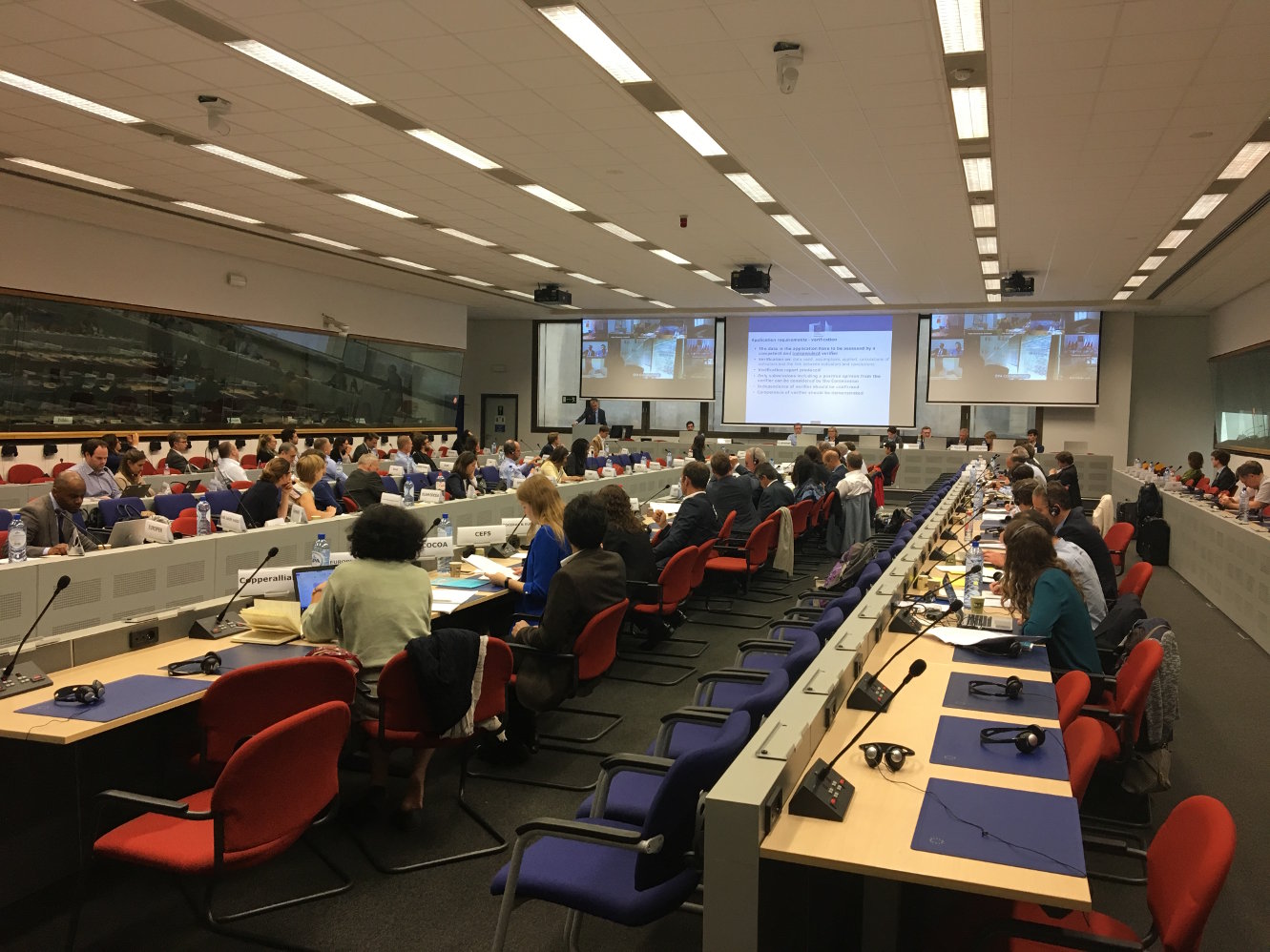
A multinational company can face different carbon-pricing systems, reporting obligations, accounting rules and compliance tests across different markets. The Open Coalition on Compliance Carbon Markets is not a new global carbon price. It matters because the next phase of carbon pricing is not only building more markets. It is making them easier to compare, trust and connect.
Information only
This guide is for general information only. It is not legal, regulatory, accounting, tax, procurement, investment or financial advice. Carbon market rules, Article 6 implementation, corporate claims guidance and domestic carbon-pricing policies can change. Check current official sources and professional advice before relying on this for any compliance, pricing, reporting or investment decision.
On 7 May 2026, the European Commission, acting for the European Union (EU), launched the Open Coalition on Compliance Carbon Markets with Brazil and China. New Zealand and Germany were named as the first countries to join. Brazil will chair the coalition for its first two years, with China and the European Commission as co-chairs.
The sticky statistic is this: the Commission says there are around 80 carbon-pricing schemes in place across 50 countries. That is enough to make carbon pricing a global policy language, but not enough to make it a single system. A carbon price in one jurisdiction can sit on a different legal base, emissions boundary, accounting method, offset rule, registry process and corporate-compliance test from a carbon price somewhere else.
Core test
Carbon markets are easier to launch than to align. The Open Coalition matters if it can make a growing patchwork of domestic systems easier to compare without pretending they are already the same.
That is the reason this coalition is worth watching. It is not trying to make every country copy the EU Emissions Trading System (EU ETS). It is trying to answer a more awkward question: when carbon markets multiply, who decides whether their accounting, integrity and compliance claims are comparable?
Quick answer
| Question | Short answer |
|---|---|
| What is the Open Coalition on Compliance Carbon Markets? | An international cooperation platform launched by the EU, Brazil and China to strengthen domestic compliance carbon markets and carbon-pricing policies. |
| Is it a new carbon market? | No. It is not a new trading system or a global allowance market. It is a forum for cooperation on domestic compliance markets, carbon accounting and carbon-pricing design. |
| Who can join? | The European Commission says it is open to countries with nationwide compliance carbon markets, such as emissions trading systems or carbon taxes. Subnational carbon-pricing authorities can participate as observers. |
| Why does it matter? | Because carbon pricing is becoming less about one market in isolation and more about whether different systems can be trusted, compared and used in corporate or policy decisions. |
| What should readers watch next? | The coalition's secretariat and workplan are due to be taken forward at the Carbon Market Conference on 15 September 2026 in Wuhan, China. |
Data checked
This article was checked on 18 June 2026 against the European Commission launch announcement, European Commission carbon markets material, the EU ETS overview and the United Nations Framework Convention on Climate Change (UNFCCC) Paris Agreement Crediting Mechanism page. Coalition membership, governance documents, workplan details and Article 6 implementation can change.
The numbers to know
| Number or date | What it refers to | Why it matters |
|---|---|---|
| 7 May 2026 | Official launch of the Open Coalition on Compliance Carbon Markets. | Turns a declaration into a working coalition with named participants and next steps. |
| Around 80 | Carbon-pricing schemes the Commission says are in place globally. | The problem is no longer only adoption. It is whether different carbon-pricing systems can be understood together. |
| 50 countries | The approximate country spread behind those carbon-pricing schemes. | Carbon market coordination is becoming a trade, compliance and diplomacy question, not only an environmental-policy question. |
| 15 September 2026 | Planned Carbon Market Conference in Wuhan, China. | The coalition's secretariat and workplan are expected to move from launch language into implementation detail. |
| 2005 | Launch year of the EU ETS. | The EU enters the coalition with more than two decades of emissions-trading experience. |
The important thing is not that there are 80 schemes. It is that 80 schemes can create 80 different ways of defining coverage, measuring emissions, using offsets, treating imports, handling registry data and describing corporate compliance. That is where the coalition sits.
A practical company example
Imagine an industrial group that sells carbon-intensive materials into the EU, operates covered facilities in China and buys from suppliers in Brazil. The exact duties would depend on the product, sector and local law. But the coordination problem is easy to see.
| Market exposure | Evidence question | Why coordination matters |
|---|---|---|
| EU imports or production | Which emissions data, allowance costs or border-carbon evidence are required? | The company may need supplier data that can stand up to customs, carbon-price and audit scrutiny. |
| Chinese covered activity | Which emissions boundary, reporting method and compliance obligation applies locally? | A large domestic emissions trading system can create evidence that is important but not automatically comparable with EU rules. |
| Brazilian suppliers or market exposure | How do domestic carbon-market rules, project evidence or Article 6 links affect claims? | Emerging systems can matter for supply chains, future credits and cross-border climate evidence. |
The point is not that one rulebook should overwrite the others. The point is that a company, regulator or investor may need to understand where the evidence matches, where it differs and where it cannot be compared at all.
Coordination map
| Domestic systems | Shared coordination layer | Practical question |
|---|---|---|
| European Union Emissions Trading System, China's emissions trading system, Brazilian carbon-pricing policy and other national systems | Monitoring, reporting and verification | Are emissions measured and checked in ways that can be understood across borders? |
| Carbon taxes, cap-and-trade systems and sector rules | Carbon accounting and registry evidence | Can allowances, reductions, transfers and obligations be counted without confusion or double counting? |
| Compliance systems that allow some offset use | Offset quality and Article 6 links | Which credits can enter a regulated system, and what claims can follow? |
| Companies exposed to more than one market | Corporate compliance evidence | Can the same group explain its obligations without building a separate evidence universe for every jurisdiction? |
What the coalition is trying to coordinate
Compliance carbon markets are public-policy systems. They can include cap-and-trade programmes, carbon taxes, allowance markets, sector rules and other regulated pricing mechanisms. Unlike voluntary carbon markets, they are usually tied to law, permits, covered sectors, reporting obligations and penalties.
The Open Coalition does not replace those domestic choices. The countries involved still decide their own climate laws and carbon-pricing design. But the coalition can create a place where governments compare the machinery behind those choices.
Sector systems matter too. The IMO Net-Zero Framework shows why carbon pricing coordination is not only a national-market question: global shipping may face a fuel-intensity standard, emissions pricing mechanism and fund structure that need to be understood alongside regional systems such as the EU ETS.
| Coordination area | What it means in practice | Why it matters |
|---|---|---|
| Monitoring, reporting and verification (MRV) | How covered emissions are measured, reported, checked and corrected. | A carbon price is only as credible as the emissions data sitting underneath it. |
| Carbon accounting | How reductions, allowances, transfers, offsets and compliance obligations are counted. | Weak accounting can let the same climate benefit appear in more than one place. |
| Offset use | Whether high-integrity offsets can be used inside compliance systems and under what limits. | Offsets can lower costs, but they can also import quality and claim risk into a regulated system. |
| Corporate compliance | How companies operating across markets understand and evidence their obligations. | A multinational buyer or supplier may face different carbon-price rules in different jurisdictions. |
| Market integrity | How systems protect registry data, allowance ownership, market conduct and claims. | Trust matters because carbon markets are political institutions as well as pricing tools. |
This is why the coalition should be judged as infrastructure. A launch statement is easy. The useful test is whether the workplan makes emissions data, accounting methods and compliance evidence easier to compare without flattening important differences between national systems.
Why the EU, Brazil and China matter
The founding trio is significant because the coalition is not only a European project.
The EU brings the world's longest-running international emissions trading system. The EU ETS was set up in 2005 and is now in its fourth phase, covering 2021 to 2030. It also sits beside newer European carbon-pricing tools, including the Carbon Border Adjustment Mechanism (CBAM), EU ETS2 (European Union Emissions Trading System 2) and the EU 2040 climate target. That gives the EU a strong interest in how other carbon-pricing systems are designed, evidenced and compared.
Brazil matters because carbon-market diplomacy is becoming more important for countries with large mitigation potential, forest and land-use questions, industrial-policy interests and future Article 6 opportunities. The Commission says the coalition builds on a declaration endorsed at the 2025 United Nations climate summit in Belem, Brazil.
China matters because it operates the world's largest national emissions trading system by covered emissions. Its participation changes the scale of the coordination question. If a system at China's scale, the EU system and emerging systems cannot be compared at all, carbon pricing can grow larger without becoming easier for companies, policymakers or trade partners to understand.
That does not mean China and Europe need identical rules. It means comparability becomes more important as large domestic markets expand. A carbon market can be domestically legitimate and still create cross-border uncertainty if outsiders cannot understand its data, accounting or compliance evidence.
Germany and New Zealand joining as early members also matters. Germany sits inside the EU system but has its own policy experience. New Zealand has a long-running emissions trading scheme and a separate domestic carbon-market history. The coalition therefore starts with a mix of scale, policy maturity and regional diversity.
Compliance markets versus voluntary carbon markets
The coalition's name is doing useful work. It says compliance carbon markets, not voluntary carbon markets.
A compliance market is created by public authority. Covered entities may have legal obligations to report emissions, hold permits, surrender allowances, pay a carbon tax or meet other regulated requirements. A voluntary carbon market credit is usually bought by a company or organisation making a voluntary climate claim, contribution or offsetting decision. That is why voluntary buyers still need a separate carbon credit quality checklist before treating a credit as claim-ready.
The two worlds can overlap. A compliance system may allow limited use of offsets. A voluntary project may seek authorisation under Article 6. A company may face a regulated carbon price in one part of its business and buy voluntary credits for a separate climate claim. But the purposes are different.
| Market type | Main driver | Main evidence question |
|---|---|---|
| Compliance carbon market | Law, regulation or formal carbon-pricing policy. | Has the covered entity met its legal or regulatory obligation? |
| Voluntary carbon market | Corporate claims, climate contributions, offsetting or buyer preference. | Does the credit support the specific claim being made? |
| Article 6 cooperation | Country-to-country or United Nations supervised Paris Agreement carbon market rules. | Is the mitigation outcome authorised, reported and counted only once? |
That distinction matters because integrity problems do not move neatly inside one box. A weak offset rule can affect a compliance system. Weak country accounting can affect Article 6 trust. Weak voluntary claims can damage confidence in carbon markets more broadly. The coalition is aimed at the compliance layer, but it will inevitably sit near those other integrity debates.
How Article 6 fits in
Article 6 of the Paris Agreement is the international accounting framework for voluntary cooperation between countries. It matters because it tries to prevent double counting when mitigation outcomes move across borders.
The European Commission says one of its priorities for the coalition is encouraging a race to the top for carbon-credit quality, building on the work of the Article 6.4 Paris Agreement Crediting Mechanism. The UNFCCC describes that mechanism as the United Nations' new high-integrity carbon crediting mechanism under the Paris Agreement.
The important caveat is that Article 6 does not automatically make every carbon market compatible with every other market. It gives countries a framework for cooperation, authorisation and accounting. Domestic compliance systems still need their own rules on coverage, data, registries, offset eligibility, reporting and enforcement.
That is where the Open Coalition can become useful. If it helps governments compare accounting methods and build clearer evidence expectations, it can make Article 6 and domestic carbon-pricing systems easier to understand together. If it stays at the level of broad cooperation language, it will matter less.
What the coalition can and cannot control
The coalition should not be treated as a super-regulator. It does not set the carbon price for the EU, China, Brazil or any other member. It does not rewrite domestic climate law. It does not decide whether a company's climate claim is credible. Its power is softer, but still important: it can shape norms, comparisons and shared technical expectations.
| Control level | Examples | Reader takeaway |
|---|---|---|
| Direct work area | Secretariat, workplan, member cooperation, technical exchange and shared priorities. | This is where the first practical evidence of value should appear. |
| Influence | Best practice on MRV, accounting comparability, offset quality and corporate compliance across systems. | The coalition can make carbon-market evidence more legible, even if it cannot force every system to converge. |
| No direct control | Domestic carbon prices, national climate laws, company claims, trade disputes and political acceptance of carbon pricing. | Do not read the coalition as a guarantee that carbon markets will link, harmonise or avoid controversy. |
What success and failure look like
The coalition becomes important if it produces usable comparison tools, not just more meetings. The clearest sign would be a workplan that helps policymakers and market users answer practical questions.
- Can two carbon-pricing systems compare emissions data without hiding methodological differences?
- Can a company operating across markets understand which obligations are comparable and which are not?
- Can offset use inside compliance systems be limited to credits with credible accounting and quality controls?
- Can domestic carbon markets learn from each other without creating a weak lowest-common-denominator standard?
- Can Article 6 accounting and domestic carbon pricing reinforce each other instead of creating parallel evidence files?
| Outcome | What it would look like | Why readers should care |
|---|---|---|
| Success | Clearer monitoring, reporting and verification expectations, better registry interoperability, more consistent accounting language and stronger offset-use safeguards. | Companies and policymakers can compare systems without assuming they are identical. |
| Partial success | Useful technical exchange, but limited public tools or slow adoption by member countries. | The coalition may improve policy learning while staying hard for market users to apply. |
| Failure | A diplomatic label, duplicate reporting, inconsistent accounting outcomes, weak offset rules or vague claims about market integrity. | Carbon pricing could keep spreading while becoming harder to trust and compare. |
The disappointment scenario is clear. If the coalition becomes a diplomatic label without technical outputs, it will not change much. If it pushes comparability too far, it could blur real differences between systems. If it focuses on offset supply before accounting integrity, it could import voluntary-market trust problems into compliance markets.
The useful middle path is boring but valuable: better data, clearer accounting, stronger terminology and a more honest map of where systems are genuinely comparable.
What to watch next
The next milestone is the coalition workplan expected around the Carbon Market Conference on 15 September 2026 in Wuhan. That should show whether the launch becomes an active technical programme or remains mostly diplomatic signalling.
Readers should watch five things.
- Which countries join after Germany and New Zealand.
- Whether the secretariat and workplan publish clear technical priorities.
- How the coalition handles offset use inside compliance carbon markets.
- Whether Article 6 accounting is treated as central or as an optional add-on.
- Whether corporate-compliance comparisons become clearer for companies exposed to more than one carbon-pricing system.
The best outcome is not a slogan about a global carbon market. It is a set of practical tools that make carbon-pricing systems easier to trust, compare and scrutinise across borders.
Bottom line
The Open Coalition on Compliance Carbon Markets matters because carbon pricing is entering its coordination phase. The world does not have one carbon price. It has a growing patchwork of domestic systems, border rules, Article 6 pathways, voluntary credits and corporate evidence demands.
The future challenge for carbon pricing is no longer only whether countries can create carbon markets. It is whether those markets can be trusted, compared and understood across borders. The Open Coalition matters because it focuses on that harder problem.
The coalition's real test is whether it makes that patchwork more legible without pretending it is already harmonised. If it can improve monitoring, accounting, offset integrity and compliance comparability, it could become quiet but important climate-market infrastructure. If it cannot, it will be another reminder that carbon markets are easier to launch than to align.
FAQ
What is the Open Coalition on Compliance Carbon Markets?
It is an international coalition launched by the EU, Brazil and China to support cooperation on domestic compliance carbon markets and carbon-pricing policies.
Is the coalition the same as Article 6?
No. Article 6 is part of the Paris Agreement and deals with international cooperation and carbon market accounting between countries. The coalition is a separate cooperation platform focused on compliance carbon markets and carbon-pricing systems.
Does the coalition create a global carbon price?
No. It does not create one global carbon price or one global trading system. It is aimed at cooperation, comparability and integrity across domestic carbon-pricing systems.
Which countries launched the coalition?
The coalition was launched by the European Commission on behalf of the EU, together with Brazil and China. Germany and New Zealand were named as first members.
Why does it matter for companies?
Companies exposed to several carbon-pricing systems may need to understand different reporting, accounting, offset and compliance rules. Better coordination could make those rules easier to compare, though it will not remove the need to check local requirements.
How is this different from the voluntary carbon market?
Compliance carbon markets are built around public rules and legal obligations. Voluntary carbon markets are usually driven by corporate claims, climate contributions or buyer preferences. The two can overlap, especially around offsets and Article 6, but they are not the same thing.
Useful source links
- European Commission: EU, Brazil and China launch Open Coalition on Compliance Carbon Markets
- European Commission: Carbon markets
- European Commission: EU Emissions Trading System
- UNFCCC: Paris Agreement Crediting Mechanism
What to watch next
The useful signals are the coalition's secretariat, workplan and terms of reference details, any new members, and whether the 15 September 2026 Wuhan Carbon Market Conference produces implementation material rather than another coordination statement.