
Reusable water bottles UK: what to buy, reuse or skip
Choose a reusable water bottle by capacity, filled weight, cleaning, leakage, insulation and replacement parts, or decide that the bottle you own is still the better option.
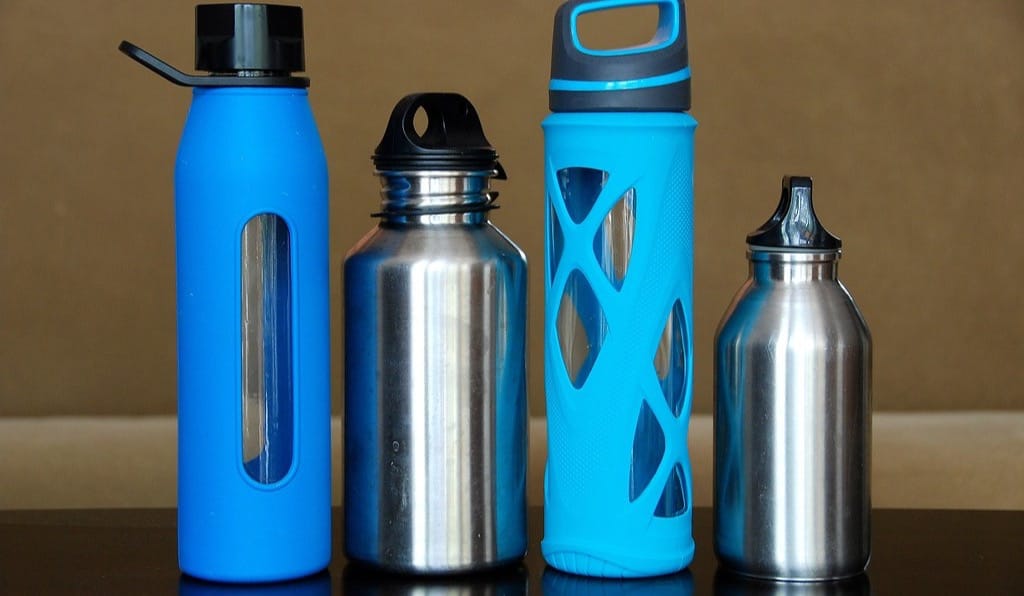
The bottle you already carry is usually the lowest-waste option. Replace it when leakage, cleaning, capacity or weight keeps getting in the way, then choose around the journey rather than the material or impact claim printed on the box.
A bottle can be beautifully made and still spend most of its life in a kitchen cupboard. Some are too heavy once filled. Others trap smells around a complicated lid, do not fit the bag they were bought for or hold too little water for a day without reliable refills.
The useful comparison is therefore quite ordinary: will this bottle be carried, cleaned and kept? That question does more work than a list of fashionable materials.
Affiliate disclosure: This guide contains an Awin affiliate link. The Planet Brief may earn a commission from a qualifying purchase, at no extra cost to you.

Our practical pick
Ocean Bottle Original 500 ml
For a daily commute, the Ocean Bottle Original is the clearest premium option in this comparison. Its 500 ml capacity, 259 gram empty weight, dishwasher-safe design and published replacement route make the buying logic easier to verify than a vague sustainability claim.
Choose it if: you want a compact insulated bottle and value replacement parts.
Skip it if: the bottle you already own works, or 500 ml is too small for your day.
View the Ocean Bottle OriginalThis is a specification-led recommendation, not a hands-on product test. Check the current product page for stock, dimensions and terms.
Keep the bottle that already works
If the bottle you own is safe, cleanable and used regularly, there is little reason to replace it for a greener label. The United Nations Environment Programme's life-cycle work identifies repeated use as the important shift away from single-use products. Buying another reusable bottle does not create that repeat use by itself.
Replacement becomes reasonable when a persistent leak makes the bottle unreliable, damaged or inaccessible parts prevent proper cleaning, the capacity does not match the journey, or the filled bottle is simply too awkward to carry. A lost seal can also be a small failure with a large consequence if the manufacturer does not sell the part.
Before buying, try to solve the actual problem. A replacement lid may fix a bottle that otherwise works. A tap-water refill can make a compact bottle more useful than a litre of water carried all day. For school use, labelling and a simple leakproof lid may matter more than insulation; the sustainable back-to-school guide covers that routine separately.
Choose the journey before the material
Stainless steel, glass and reusable plastic all involve trade-offs. Insulated steel is robust and useful for temperature control, but it is heavier and more resource-intensive to manufacture than a basic lightweight bottle. Glass is easy to inspect and does not retain flavours easily, but it is heavier and breakable. Reusable plastic is light and inexpensive, although scratches, staining and unavailable replacement lids can shorten its useful life.
No material wins in every setting. Start with where the bottle will go and how often it can be refilled.
| Usual journey | Likely route | Main compromise |
|---|---|---|
| Desk and short commute | About 500 ml with a simple, easy-clean lid | More refills on longer days |
| Driving, gym or cycling | One-handed or straw lid that fits the holder | More lid parts and seals to clean |
| Long walk or limited refill access | 750 ml to one litre | Filled weight and bag fit |
| Hot and cold drinks | Insulated model approved for the intended drink | Weight, cost and more material |
| Existing bottle remains reliable | Keep it | No new features, but no unnecessary purchase |
Filled weight changes the decision
Empty weights understate what a bottle feels like in use. Five hundred millilitres of water adds about 500 grams before the container is counted. The current Ocean Bottle Original specification lists 259 grams for the empty 500 ml bottle, which would put the filled weight at roughly 759 grams before any ice or accessories.
That can be perfectly manageable in a work bag and irritating in a small shoulder bag. A one-litre insulated bottle can solve refill anxiety while creating a carrying problem of its own. Weighing a current bottle when full is a better starting point than comparing capacities on screen.
Diameter matters too. Measure the narrowest point in the bag pocket or cup holder rather than relying on a general compatibility claim. The Ocean Bottle Original is listed as 6.8 cm wide and 21.7 cm high, but real pockets, zips and holders differ.
The lid decides whether cleaning stays easy
A wide opening helps with filling, ice and hand cleaning, but the drinking lid deserves equal attention. Count the seals and removable pieces. Check whether fingers or a brush can reach every surface that touches the drink, and whether replacement seals and lids are sold for the exact model.
The Food Standards Agency advises washing reusable containers thoroughly in warm soapy water and drying them properly, or using a dishwasher where the container allows it. A bottle that retains an odour after ordinary cleaning, hides residue around a seal or cannot dry between uses will be harder to keep in daily rotation.
Manufacturer instructions still decide dishwasher and drink compatibility. Do not assume that an insulated bottle is suitable for carbonated drinks, or that a straw lid can safely be used with hot liquid. Those restrictions can make an otherwise good bottle a poor match for the intended routine.
What the Ocean Bottle specification promises
The current Ocean Bottle Original is a 500 ml double-wall insulated bottle made from recycled stainless steel, plastic and silicone. Ocean Bottle lists an empty weight of 259 grams, a 6.8 cm diameter, dishwasher cleaning up to 60 degrees Celsius and claimed insulation of up to 18 hours for cold drinks and six hours for hot drinks.
Those details make it a plausible commuter bottle, but they remain manufacturer specifications. The Planet Brief has not independently tested leakage, retained odour, cleaning around the seals, comfort when full or insulation in ordinary use.
The repair route is more interesting than a generic durability promise. Ocean Bottle's current warranty page describes a ten-year repair and replacement scheme covering manufacturing defects and accidentally broken parts. Lost parts are limited, postage treatment depends on the type of claim, and scratches, punctures, normal wear and gradual cosmetic changes are excluded. That is more useful evidence than the word “lifetime”, but readers should still check that the exact replacement part remains available.
Check the current Ocean Bottle Original specification.
What the ocean-plastic claim establishes
Ocean Bottle says each bottle or flask sold funds collection of 11.4 kilograms of ocean-bound plastic, described as the weight equivalent of 1,000 plastic bottles. The wording matters. It is a company-reported funding and collection claim, not proof that one purchased bottle has removed 1,000 identifiable bottles from the ocean.
Nor does the collection claim calculate the product's own manufacturing footprint or make another purchase impact-free. The company's impact page says collection focuses on coastal communities, rivers and waterways within 30 miles of the ocean. Its reporting should be read for the collection boundary, partners and treatment routes rather than reduced to one large number.
Ocean Bottle is also a certified B Corporation with a current public B Impact score of 107.6. That assessment covers the company across areas including workers, community, environment and customers. It is useful company-level context, but it is not a life-cycle certification for this individual bottle and does not independently verify every product-page claim.
When a premium bottle is worth paying for
A premium bottle earns its place when the added features solve a repeated problem. Insulation can help someone who carries water through a hot commute. A wide base opening can make cleaning easier. A reliable parts scheme can prevent a damaged lid from writing off an otherwise sound bottle.
It is harder to justify when a dependable bottle is already in use, 500 ml is too small for the journey, steel is unnecessarily heavy, or the buyer mainly wants the environmental story attached to the purchase. A basic lower-cost bottle carried for years can be a better decision than a premium one left behind.
The same principle applies when packing for a trip. The sustainable summer holiday guide starts with refill access, luggage and the items already owned rather than assembling a new set of reusable products for one journey.
The practical buying checklist
- Measure the bag pocket or cup holder the bottle must fit.
- Add the water weight to the published empty weight.
- Choose capacity around realistic refill access.
- Count lid pieces and check whether every surface can be cleaned and dried.
- Confirm dishwasher, hot-drink and carbonated-drink instructions.
- Look for exact-model lids, seals and straws before relying on a repairability claim.
- Read the warranty exclusions and postage terms.
- Keep environmental funding claims separate from product life-cycle evidence.
- Skip the purchase if the bottle already owned does the job.
A bottle becomes useful through repetition. Capacity, weight and cleaning determine whether that repetition is likely; the environmental branding comes afterwards.
Sources
- United Nations Environment Programme: single-use products and reusable alternatives
- Food Standards Agency guidance on cleaning reusable containers
- Ocean Bottle Original: current product specification
- Ocean Bottle: repair and replacement scheme
- Ocean Bottle: company-reported collection and impact boundary
- B Lab: Ocean Bottle public B Corp profile
- Feature image: reusable water bottles, Wikimedia Commons public-domain dedication

Data checked
Specifications, warranty terms, impact wording and B Corp status checked 28 July 2026. The Ocean Bottle recommendation is based on published specifications and replacement support; The Planet Brief has not independently tested the product.
Affiliate disclosure: The Planet Brief may earn a commission if you buy through an Awin link in this guide. This does not change the price you pay or the editorial assessment.
Know this subject well? Send evidence, corrections or a useful lead to hello@theplanetbrief.com.