
Water butts UK: how to choose the right size, diverter and setup
Choose a UK water butt by size, footprint, downpipe compatibility and included fittings. Compare compact and standard complete kits before buying.
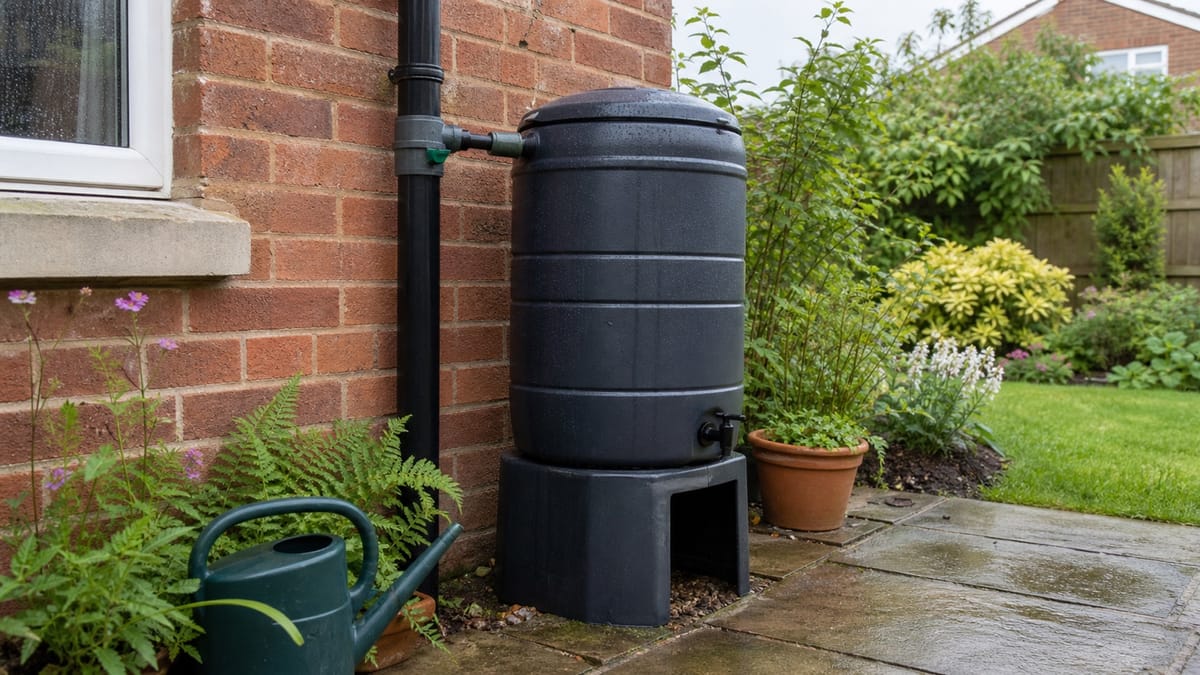
A useful water butt begins with the downpipe and the space beside it, not the largest capacity on the product page. Measure the installed footprint, check the diverter and buy a complete kit unless you already know which fittings you need.
A 100-litre slimline butt can suit a narrow patio or small garden. A wider 168-litre barrel gives more storage without turning the installation into a two-tank project. Both can be poor purchases if the stand is unstable, the tap sits too low for a watering can or the diverter does not fit the downpipe.
This guide contains Awin affiliate links. The Planet Brief may earn a commission from a qualifying purchase, at no extra cost to you.
Our first choice for a narrow space
Strata 100L slimline complete kit
The kit is a practical starting point for a small garden, patio or narrow wall because the current listing includes the butt, lid, tap, stand and diverter.
Choose it if: a 35 cm-wide container gives you enough storage and the diverter fits a 68 mm round or 65 mm square plastic downpipe.
Skip it if: the downpipe is cast iron, the garden has heavy watering demand or you have room for a wider standard barrel.
Check the Strata 100L complete kitWhy it leads: the complete kit removes much of the fittings guesswork from a first installation. Original Organics currently lists it as in stock, made in the UK from recycled plastic and covered by a five-year guarantee. This is a specification-led recommendation, not a hands-on TPB test.
The first check takes five minutes. Find the downpipe that drains the cleanest suitable section of roof, measure the wall space and note whether the pipe is round, square, plastic or cast iron. Then decide where a full container, weighing roughly one kilogram per litre of stored water, can stand safely.
The downpipe decides whether the kit works
Most domestic water butts fill through a diverter cut into a downpipe. Rain from the roof enters the gutter, travels down the pipe and is diverted into the container. A correctly installed diverter should return excess water to the downpipe once the butt is full rather than letting it spill beside the wall.
That simple arrangement creates several compatibility checks. Diverters are made for particular pipe shapes and diameters, and many standard kits are intended for plastic rather than cast-iron pipes. The Strata 100L kit described below fits 68 mm round and 65 mm square downpipes, according to the current merchant specification, but is not suitable for cast iron. The Harcostar alternative accepts several round and square sizes. Measure rather than guessing from a photograph.
A downpipe serving a dirty or heavily shaded roof may also carry more leaves and organic material. The Royal Horticultural Society recommends keeping gutters clear and using a filter to reduce debris and plant-disease risks in stored water.
Measure the complete installation
Product dimensions often describe the container without showing what the stand, tap and diverter require. Measure width, depth and total installed height. Leave room to remove the lid for annual cleaning, reach the tap and slide a watering can underneath it. If a linking hose or overflow route may be added later, allow space for that too.
The base must be firm and level. One hundred litres of water weighs about 100 kilograms before the container and stand are added. A full 168-litre butt is correspondingly heavier. Soft soil, loose paving, an overhanging stand or a sloping surface can turn a straightforward installation into an unstable one.
Tenants should also check what they are allowed to cut or alter. A butt connected to a shed downpipe may be less intrusive than changing pipework fixed to the home, but the practical answer depends on the property and tenancy.
Choose capacity by use, not by the biggest number
Capacity determines how long the stored water lasts between rainfalls, but roof area and rainfall determine how often the butt can refill. The Royal Horticultural Society estimates that a small shed roof in dry south-east England can collect around 2,500 to 3,500 litres in a year. A small butt may therefore fill many times, even though it cannot carry that annual volume through a long dry spell.
A 100-litre butt is a sensible starting point for pots, houseplants and a small flower bed. Around 150 to 200 litres gives more useful reserve for a typical garden without requiring two linked containers. Larger vegetable plots, greenhouses and allotments can use far more, but the next step may be two linked butts or a larger rainwater-harvesting system rather than one oversized barrel squeezed into the wrong place.
| Capacity route | Likely fit | What to check |
|---|---|---|
| About 100 litres | Small patio, containers, houseplants or narrow wall space. | Whether the smaller reserve is enough between dry days. |
| About 150 to 250 litres | Ordinary garden watering with room for a round barrel. | Diameter, full installed height and watering-can clearance. |
| 400 litres or more | Greenhouse, vegetable plot, allotment or heavier summer demand. | Level base, linking kit, overflow and whether the roof can refill it usefully. |
Two complete kits to compare
The most useful first purchase is usually a complete kit. A barrel sold alone may still need a stand, tap and compatible diverter before it can collect anything. Product photographs also make scale difficult to judge, so compare installed dimensions rather than capacity alone.
Best for narrow spaces
Strata 100L slimline kit
The 35 cm-wide butt is 97 cm high before the 31 cm stand is added. The current listing includes the lid, tap, four-piece stand and diverter.
Check the Strata 100L complete kitA good fit where width is scarce. Check total height and do not use the supplied diverter with a cast-iron downpipe.
Best for a typical garden
Harcostar 168L kit
This wider barrel currently includes a tap, lockable lid, 30 cm stand and universal rain-trap diverter. The butt is 82 cm high and 58 cm in diameter before the stand.
Check the Harcostar 168L complete kitChoose it for more reserve and broader pipe compatibility. Skip it if a 58 cm barrel will obstruct a path or cannot sit on a firm level base.
Higher-capacity, decorative and wall-mounted designs can solve different space problems. Use the current Original Organics water-butt range only after writing down your maximum footprint, pipe size and required capacity. The range includes containers and accessories, so check that any product described as a butt actually includes the fittings you need.
Installation needs a safe overflow route
A diverter should send rainwater into the butt until the stored water reaches the connection level, then allow excess flow to continue down the original pipe. That depends on the diverter being fitted at the correct height. Follow the supplied installation guide rather than placing the hole where it looks convenient.
Keep the original drainage route working. A water butt is useful household storage, but it is not a substitute for drainage or flood protection. It may already be full when a storm arrives, and a small domestic container cannot absorb the runoff handled by a designed drainage system. Our report on England's flood-defence programme shows the much larger infrastructure involved in protecting properties.
Before filling, check that the tap is closed, the lid sits securely and every connector is supported rather than pulling on the container wall. After the first heavy rain, inspect the downpipe, diverter, linking hose and base for leakage or movement.
Stored rainwater needs ordinary maintenance
Rainwater collected from a roof is useful for established garden plants, but it is not drinking water. Keep the lid closed, clear leaves from gutters and use the stored water regularly. The Royal Horticultural Society advises cleaning water butts annually with warm water and a little washing-up liquid, and emptying and cleaning a butt if the water smells rather than adding chemicals.
The same guidance recommends avoiding stored butt water on seedlings because it may carry damping-off diseases. For hoses connected to stored water, use a coarse spray rather than a fine mist, disconnect the hose after use and let it drain. Research published by the UK Health Security Agency found minimal aerosolisation when water was poured from a watering can, while a fine hose spray increased dispersal.
A watering can is also the simplest way to use the small amount of pressure created by a raised stand. A hose may need a pump to work well. If a product page implies that a tap alone will provide ordinary mains-like hose pressure, treat that as a reason to look more closely.
When buying one will not solve the problem
Do not buy a water butt until there is a suitable downpipe, a safe base and somewhere useful for the water to go. A container that blocks a passage, cannot be cleaned or serves a garden that rarely needs watering is likely to become clutter rather than useful infrastructure.
Nor should a single butt be treated as drought proofing. It can reduce treated mains-water use for routine garden watering and remain useful during some hosepipe restrictions, but a small store empties quickly in hot weather. Soil improvement, mulch, careful plant choice and watering at the roots can reduce demand before more storage is added. The wider UK heatwave climate-risk guide explains why hotter summers are becoming an adaptation question for homes, water and infrastructure.
Which water butt should you choose?
Start with the pipe and footprint. If space is narrow and the standard plastic downpipe is compatible, the 100-litre Strata complete kit is the simplest first choice. If there is room for a wider barrel and the garden uses more water, the 168-litre Harcostar kit offers more reserve and broader listed pipe compatibility.
Move beyond those sizes only when the watering demand justifies it and the installation can carry the extra weight. The best water butt is not the largest one that fits on a product page. It is the complete system that fits beside the real downpipe, stands level when full and is easy enough to use that the stored rainwater reaches the garden.
Sources
- Royal Horticultural Society: collecting, storing and reusing water
- Ofwat: help for households to save water
- UK Health Security Agency research: stored rainwater and common gardening activities
- Original Organics: Strata 100L kit specification
- Original Organics: Harcostar 168L kit specification
Data checked
Data and product availability checked 15 July 2026. Product recommendations are specification-led and have not been hands-on tested by The Planet Brief. Stock, kit contents, dimensions, guarantees and programme terms can change, so check the current listing and installation instructions before buying.
Affiliate disclosure: The Planet Brief may earn a commission from qualifying Awin purchases, at no extra cost to you.
Know this subject well? Send evidence, corrections or a useful lead to hello@theplanetbrief.com.