
Hong Kong climate reporting rules: HKEX timetable and who must report
Hong Kong climate reporting rules explained: the 2025 HKEX requirements, LargeCap timetable, Main Board treatment, Scope 3 reliefs and IFRS S2 alignment.
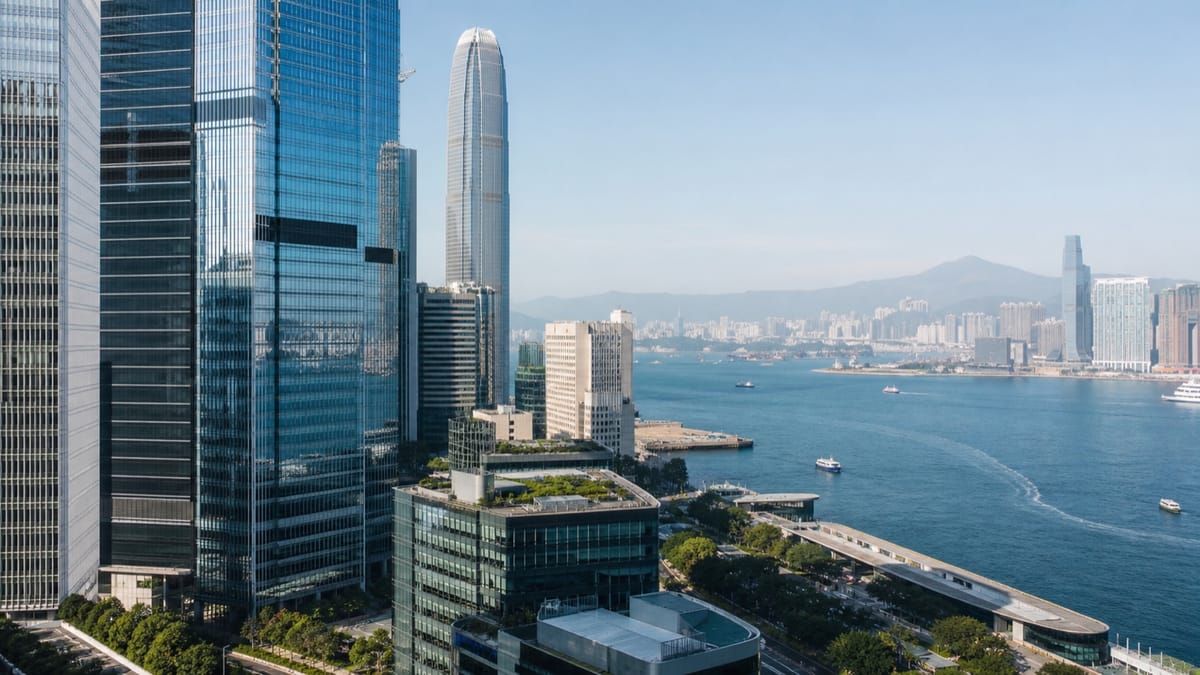
Hong Kong's climate reporting rules now split listed companies into three routes. LargeCap issuers move to mandatory reporting across the new climate requirements for financial years beginning on or after 1 January 2026. Other Main Board issuers remain on a comply-or-explain basis. GEM issuers use the wider requirements voluntarily. Scope 1 and Scope 2 greenhouse gas emissions are mandatory for all listed issuers.
The requirements sit in Part D of the Hong Kong Exchanges and Clearing (HKEX) Environmental, Social and Governance (ESG) Reporting Code. They took effect for financial years beginning on or after 1 January 2025 and are closely aligned with International Financial Reporting Standard S2 (IFRS S2) Climate-related Disclosures from the International Sustainability Standards Board (ISSB). The issuer category determines whether a provision is mandatory, comply or explain, or voluntary.
Which Hong Kong companies must report?
| Issuer type | Scope 1 and Scope 2 emissions | Other climate requirements | Current reporting route |
|---|---|---|---|
| LargeCap issuer | Mandatory from financial years beginning on or after 1 January 2025 | Comply or explain for 2025 financial years; mandatory from financial years beginning on or after 1 January 2026 | Prepare for the full Part D requirements as mandatory |
| Other Main Board issuer | Mandatory from financial years beginning on or after 1 January 2025 | Comply or explain from financial years beginning on or after 1 January 2025 | Disclose or give considered reasons for non-disclosure |
| GEM issuer | Mandatory from financial years beginning on or after 1 January 2025 | Voluntary from financial years beginning on or after 1 January 2025 | Build from the mandatory emissions baseline |
LargeCap status is tied to the Hang Seng Composite LargeCap Index. An issuer that was a constituent throughout the year immediately before the reporting year enters the mandatory route. Once it becomes subject to mandatory disclosure under the new climate requirements, it must continue on that basis even if it later leaves the index.
The distinction between a financial year and the publication date is important. A LargeCap issuer covered for its 2026 financial year will normally publish that ESG report in 2027. The ESG reporting deadline tracker separates reporting-period starts from filing and publication dates across jurisdictions.
What the new climate requirements cover
Part D follows the familiar structure of governance, strategy, risk management, and metrics and targets. It asks how the board oversees climate risk, how climate-related risks and opportunities affect the business, how the company identifies and monitors them, and which figures and targets are used to measure performance.
The strategy disclosures include current and anticipated financial effects, climate resilience and the use of climate-related scenario analysis. Metrics and targets cover greenhouse gas emissions, transition and physical risks, climate opportunities, capital deployment, internal carbon prices and remuneration where those measures are relevant.
HKEX treats an ESG report prepared in compliance with International Financial Reporting Standard S1 (IFRS S1) General Requirements for Disclosure of Sustainability-related Financial Information and IFRS S2 as compliant with Part D. That equivalence does not remove the rest of the ESG Reporting Code or the need to publish through the HKEX route. The ISSB, IFRS S1 and IFRS S2 guide explains the wider international baseline.
Scope 3 is required, but reliefs shape the first reports
The code calls for absolute gross Scope 1, Scope 2 and Scope 3 greenhouse gas emissions. Scope 1 and Scope 2 are mandatory for all listed issuers. The treatment of Scope 3 follows the wider obligation applying to the issuer, so a LargeCap company moving into mandatory Part D reporting has a different position from a GEM issuer using the wider requirements voluntarily.
Companies must identify the Scope 3 categories included in their measurement. They may use reasonable and supportable information available without undue cost or effort, and they can use value-chain data from a different reporting period where the conditions in the code are met. Those conditions include using the most recent available data and disclosing the effect of significant intervening events.
Other implementation reliefs address quantitative financial effects, anticipated financial effects and climate resilience. A relief is not a blank field. An issuer using comply or explain must provide considered reasons for non-disclosure, and HKEX encourages companies to state the work plan, progress and timetable for filling the gap.
The evidence file needs more than an emissions inventory
The emissions calculation remains a central control, but the wider disclosures draw on finance, risk, strategy and governance records. A reporting team needs evidence for board oversight, climate assumptions in financial planning, risk-management processes, scenario analysis, targets and any internal carbon price or climate-linked remuneration measure.
The preparation work is easier to manage when each claim has an owner, source and review trail. The sustainability reporting controls guide sets out a practical evidence architecture, while the Scope 3 supplier data collection guide covers value-chain requests, estimates and review checks.
- Confirm the issuer category and reporting year. Record whether the company is LargeCap, another Main Board issuer or a GEM issuer for the relevant period.
- Map each Part D provision to its obligation. Separate mandatory items from comply-or-explain and voluntary disclosures.
- Document every relief. Retain the reason, evidence, work plan and expected timetable rather than treating relief as an omission.
- Connect climate data to financial records. Current and anticipated financial effects need controlled inputs from finance and strategy teams.
- Keep the emissions boundary reproducible. Record methods, inputs, assumptions, contractual instruments and Scope 3 categories.
- Plan publication with the annual report. The ESG report covers the same period and must be published at the same time as the annual report when it is separate.
For LargeCap issuers, the transition year has passed: the wider climate disclosures now move from comply or explain to mandatory reporting. Other Main Board companies still have room to explain a missing disclosure, but that explanation needs substance. Across both routes, the practical challenge is turning an IFRS S2-aligned code into records that can be traced through the annual reporting process.
Sources
- HKEX: Appendix C2 Environmental, Social and Governance Reporting Code
- HKEX: consultation conclusions on climate disclosure requirements, 19 April 2024
- HKEX: Implementation Guidance for Climate Disclosures
Data checked
Checked on 25 July 2026 against the current HKEX ESG Reporting Code, climate disclosure consultation conclusions and implementation guidance. Review when HKEX changes the LargeCap test, implementation timetable, reliefs, emissions requirements or alignment with the ISSB standards.
Information only
General information only, not legal, accounting, assurance or compliance advice. Obligations depend on the current HKEX rules, issuer category and reporting period. Check the latest official requirements before making reporting decisions.
Know this subject well? Send evidence, corrections or a useful lead to hello@theplanetbrief.com.