
Scottish Water solar project: wildflowers and rare bees bloom beside 576 panels
Scottish Water's Gailes solar project has 576 panels beside 2,000m² of wildflower meadow, a wildlife pond and habitat for rare bees.
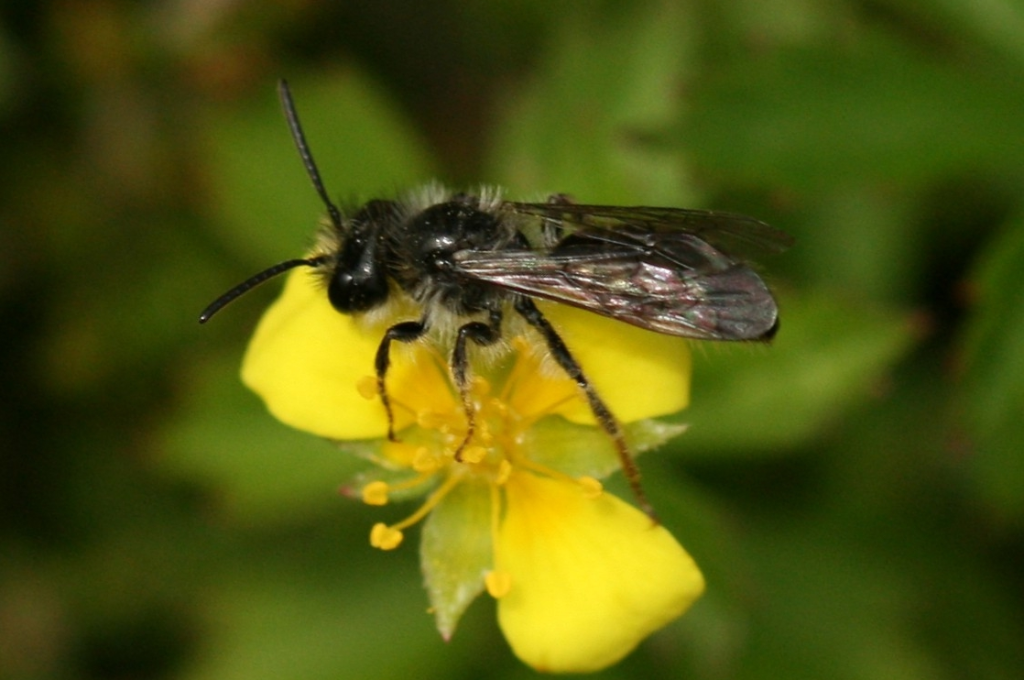
At Scotland's largest wastewater pumping station, 576 solar panels now sit beside more than 2,000 square metres of wildflower meadow, a wildlife pond, native trees and habitat used by the rare tormentil mining bee. The station near Irvine is still doing its day job. The land around it has been given more work to do.
Information only
This article is for general information only. It is not ecological, engineering, planning, procurement or energy-project advice. Generation estimates, habitat condition and species records can change, so check current project information and qualified site-specific advice before making decisions.
Gailes Wastewater Pumping Station lies south of Irvine in North Ayrshire. It returns treated wastewater to the sea and uses enough electricity that even a substantial solar installation covers only part of the load.
The £478,000 scheme added panels across the ground and roof. Scottish Water's project figures put annual generation at about 0.27 gigawatt hours (GWh), enough to provide roughly 7% of the station's electricity and avoid an estimated 54 tonnes of carbon dioxide equivalent (CO2e) each year.
But the most striking view in summer is not only the panels. Wildflowers now fill more than 2,000 square metres around the working infrastructure. A pond, bird and bee boxes, native trees, hedging and scrub have been fitted into the same operational site.
A pumping station with three jobs
Industrial and utility land is usually judged by whether it performs one essential function safely and reliably. At Gailes, that remains non-negotiable. Pumps, access routes, roof structures and maintenance space still have to work.
Before the solar design was finalised, ecologists assessed the existing site and the habitats around it. The resulting plan placed renewable generation and wildlife measures together rather than treating planting as decoration added after construction.
The pumping station now performs three distinct jobs on the same footprint. It handles wastewater, generates some of its own electricity and provides a larger patch of connected habitat beside Gailes Marsh Reserve and the Western Gailes nature conservation area.
Scottish Water says the additions have not interfered with day-to-day operation. That practical detail is important. Land beside substations, treatment works, depots and other infrastructure will only stay available for nature if maintenance teams can still reach equipment and operators do not inherit a design that makes their work harder.
What changed at Gailes
576 solar panels are expected to generate about 0.27GWh a year. Around them are more than 2,000m² of wildflower meadow, a wildlife pond, bird and bee boxes, native trees, hedging and scrub.
The rare bee in the meadow
Among the insects reported at Gailes is the tormentil mining bee, a small solitary bee that depends heavily on tormentil flowers for pollen. Buglife says the species is found in heathland and moorland across Britain and Ireland, while habitat loss, fragmentation and degradation remain its main threats.
Its presence sharpens the design question. A large area of generic grass or a packet of visually cheerful flowers is not automatically valuable habitat. Specialist insects need the right food plants, nesting ground, shelter and connections to other suitable places.
The Gailes work began with an ecological assessment for precisely that reason. Native planting, meadow, scrub, bare ground, water and boxes do different jobs. Together they make a more varied site than close-mown grass around fenced equipment.
The rare-bee claim still needs care. Scottish Water's report says the new habitat supports wildlife including the tormentil mining bee. It does not yet provide a population count, a before-and-after comparison or evidence that the species is breeding more successfully because of the scheme.
Those are questions for repeat surveys. For now, the physical change is clear: the site has more feeding, nesting and refuge opportunities than it did before, and those features sit beside rather than instead of the solar array.
Solar land does not have to be single-purpose
The Gailes array is small beside the national UK solar buildout. Its 0.27GWh of expected annual output will not move a national electricity chart. Even at the pumping station, most electricity still comes from elsewhere.
Its wider value is in the land-use detail. Solar development often attracts a blunt argument in which energy and nature are treated as competing claims on every patch of ground. Real sites are more varied. Roofs, brownfield land, utility compounds, car parks and intensively managed verges can present different choices from species-rich habitat or productive farmland.
At a constrained pumping station, the ecological work had to fit around infrastructure that was already there. That created a smaller but more demanding question: how much useful habitat could be returned without compromising the equipment?
The answer is now visible in flowers, water and planting. It complements the panels rather than excusing them. The energy figures still need to stand on their own, just as the habitat needs to be judged through condition and species use rather than the colour of a summer photograph.
This is the same distinction that matters in urban greening. A planted space can cool, drain, connect or shelter, but only if the species, soil, water and maintenance plan match the place. Green appearance is not the same as ecological function.
From one site to future projects
Scottish Water says it will carry the nature-first approach into future renewable-energy projects, with a dedicated ecological assessment used to identify the most suitable improvements at each location.
That site-by-site promise is better than copying the Gailes planting list everywhere. A pond may be useful in one place and unsuitable in another. Meadow species suited to North Ayrshire may be wrong for a different soil, climate or neighbouring habitat. Operational risks also vary.
The next evidence should therefore be local as well as cumulative. Future updates can show whether the Gailes meadow persists, whether the pond and boxes are used, whether target species return repeatedly and whether the solar system produces close to its expected output. Across a larger estate, Scottish Water can also report how much land has changed and which measures perform well enough to repeat.
That would turn one attractive site into a body of operational evidence. The first season already shows what can be built. The longer story will be told by generation meters, habitat surveys and the insects that return next summer.
For the wider energy picture, TPB tracks solar on schools and National Health Service sites, public support for renewable energy and the national solar capacity buildout. Gailes adds a smaller lesson from the ground beneath the panels: existing infrastructure land can be asked to carry more life as well as cleaner power.
Data checked
This article was checked on 11 July 2026 against Scottish Water's July 2026 account of the Gailes biodiversity work, the published solar project figures and current tormentil mining bee information from Buglife and NatureScot. Review after a Scottish Water ecological monitoring update, a material revision to generation or carbon figures, or new evidence about target-species use of the site.
Useful source links
- Scottish Water: New nature-first approach boosts biodiversity as part of solar scheme
- Scottish Construction News: Gailes Pumping Station gets solar power boost
- Buglife: tormentil mining bee species guide
- NatureScot: species report for the tormentil mining bee
- Feature image: tormentil mining bee by Sandy Rae, licensed under Creative Commons Attribution 4.0