
Sizewell B life extension to 2055: what 20 more years of nuclear power would mean
Sizewell B life extension to 2055: what the UK government and EDF agreement preserves, what the £70.50/MWh contract covers and what safety evidence still matters.
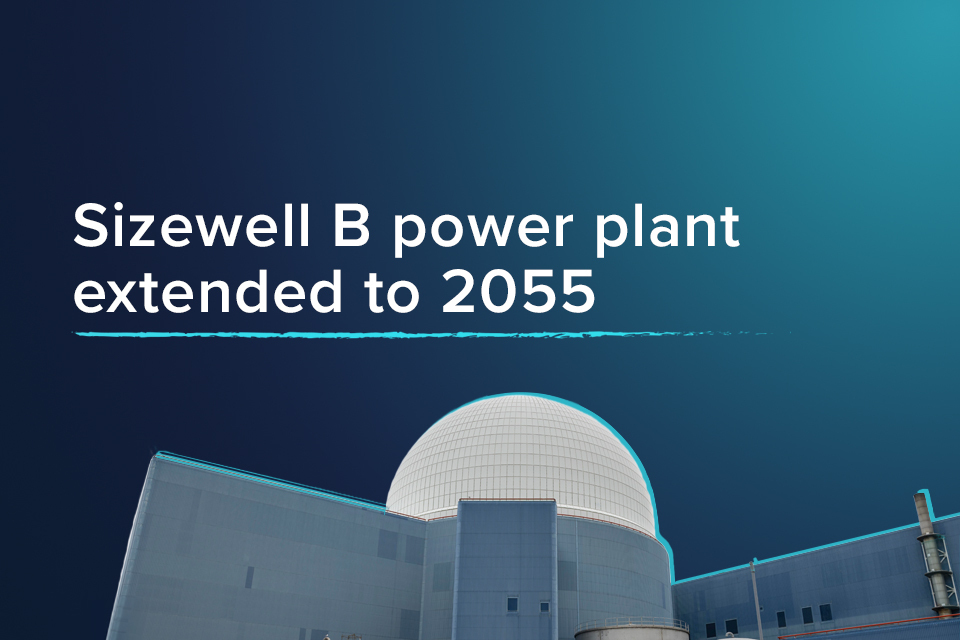
Sizewell B is set to keep generating until 2055 under terms agreed by the UK government and EDF. The deal would retain a nuclear station that currently provides about 3% of UK electricity. Keeping it online for another 20 years will still depend on investment, updated safety cases and reliable operation.
Britain's energy transition is often told as a construction story: more wind, more solar, more cables and more storage. Sizewell B raises the other question. What happens when a large low-carbon power station reaches the end of the life it was built for before the replacement system is ready?
The planned extension does not put a new reactor on the grid. It keeps an existing one from falling out of it in 2035. Government says Sizewell B currently supplies about 3% of UK electricity, equivalent to the annual use of around 2.5 million homes. Retaining that output would leave a smaller gap for new projects and gas-fired power to fill.
The agreement would leave a smaller gap for new generation, storage and demand flexibility to fill. It is a maintenance, skills and reliability story as much as a nuclear one.
A 2035 gap pushed back
On 8 July, the government said it had agreed terms with EDF for a 20-year Contract for Difference (CfD) from 2035, the station's current end date. The agreed strike price is £70.50 per megawatt hour in 2025 prices. Centrica is also expected to support the investment.
A CfD is a long-term electricity-price contract. It does not tell households what their bills will be, and it is not a live wholesale-market quote. Its purpose here is to give the operator a commercial route to invest in equipment and people for a longer working life.
| What is in the agreement | What still has to happen |
|---|---|
| A 20-year CfD is planned to begin in 2035, at £70.50/MWh in 2025 prices. | The commercial terms have to become a durable operating and investment programme. |
| Sizewell B would keep generating to 2055 instead of ending operation in 2035. | EDF must sustain equipment reliability, staffing and planned maintenance across the extended life. |
| The government says the station currently provides about 3% of UK electricity and supports around 900 skilled jobs. | Output and employment depend on the station continuing to operate safely and reliably, not only on the date in the announcement. |
Three per cent may sound modest beside national targets, but replacing that share of a country's electricity supply is not a small task when other ageing nuclear stations are retiring and electricity demand is expected to grow as heating, transport and industry electrify.
Keeping a plant open is not automatic
The Office for Nuclear Regulation has drawn an important boundary around the announcement. A plant-life decision does not need a separate extension permission from the regulator, but the site licence requires a valid safety case and ongoing regulation of safety and security.
The regulator says Sizewell B's safety cases are likely to need updating for EDF's 2055 ambition. It also points to investment in equipment reliability, people and skills, along with updated security plans. That is not a technical footnote. It is the work that turns a proposed operating date into years of electricity people can actually use.
Sizewell B has generated since 1995. Extending it to 2055 would make the station a far longer-lived part of the system than originally expected. Long operation can preserve valuable knowledge and output, but it also raises the standard for maintenance evidence. The plant has to keep meeting the case for safe operation as it ages.
Alongside wind, solar and storage
The extension should not be read as a substitute for renewable buildout. Wind, solar, grids, batteries and demand flexibility still decide whether the UK can reduce its use of gas while meeting higher electricity demand. The UK electricity generation mix shows why: renewables supplied 53.1% of electricity in the first quarter of 2026, but lower nuclear output and changing weather still affect how much gas the system needs.
It is better understood as one piece of the same system. The 98.8% zero-carbon electricity record showed how wind, solar, nuclear, interconnectors, storage and grid operation can briefly carry almost the whole Great Britain system. A longer Sizewell B life would help preserve one of those sources while the less visible parts of the transition are built out.
There is no single replacement for a station that runs across seasons and through different weather conditions. New low-carbon generation, storage and flexible demand all have different roles. The value of keeping Sizewell B open is that the system does not have to replace its output immediately at the same time as it is trying to connect much more clean generation.
The cost is a public contract, not a slogan
The £70.50/MWh strike price makes this more than a political announcement. It is a public commitment to keep an existing station available from 2035. The figure should be read with care. It is expressed in 2025 prices, applies to a future period and sits within a contract structure rather than today's retail tariff or wholesale electricity price.
That leaves a straightforward public question: does the investment preserve reliable low-carbon output at a lower overall system cost than the alternatives available when the station would otherwise close? The government says it does. The answer will become more testable as the final contract, investment programme, performance data and wider electricity mix are published.
It is also a reminder that clean-power infrastructure is not only about first construction. Existing assets can matter for decades when operators can show that the equipment, workforce and oversight remain up to the job.
What would make the extension a stronger result
The agreement is meaningful now because it preserves a route to keep current low-carbon output on the system. The stronger result arrives later: a completed investment programme, updated safety and security arrangements, continued reliable generation and a grid that has added enough new clean capacity to use the extra time well.
A new reactor would be a construction story. Sizewell B is a continuity story. It keeps part of Britain's cleaner electricity system in place while the rest of the transition tries to catch up.
Useful source links
- Department for Energy Security and Net Zero: Sizewell B life extension announcement
- Office for Nuclear Regulation: Sizewell B 2055 statement
- EDF: UK nuclear fleet strategy update
- GOV.UK: Civil Nuclear Roadmap to 2050
- Feature image: Department for Energy Security and Net Zero Sizewell B photograph, Crown copyright, reused under the Open Government Licence
Data checked
This article was checked on 10 July 2026 against the Department for Energy Security and Net Zero's Sizewell B announcement, the Office for Nuclear Regulation's 2055 statement and EDF's UK nuclear-fleet material. Review after the long-form contract is finalised, the operator publishes a material investment or outage update, or the regulator reports a significant safety, security or operating development.
Information only
This article is for general information only. It is not investment, financial, energy-procurement, regulatory, safety, technical or legal advice. Nuclear operations, safety cases, contracts and electricity-market conditions can change. Check current official sources and qualified advice before relying on any detail for a decision.
Know this subject well? Send evidence, corrections or a useful lead to hello@theplanetbrief.com.