
Carbon market update July 2026: prices are visible, but evidence still decides the market
Carbon market update July 2026: carbon prices, CORSIA, Article 6, voluntary credits and removals show a market with more data but uneven evidence.
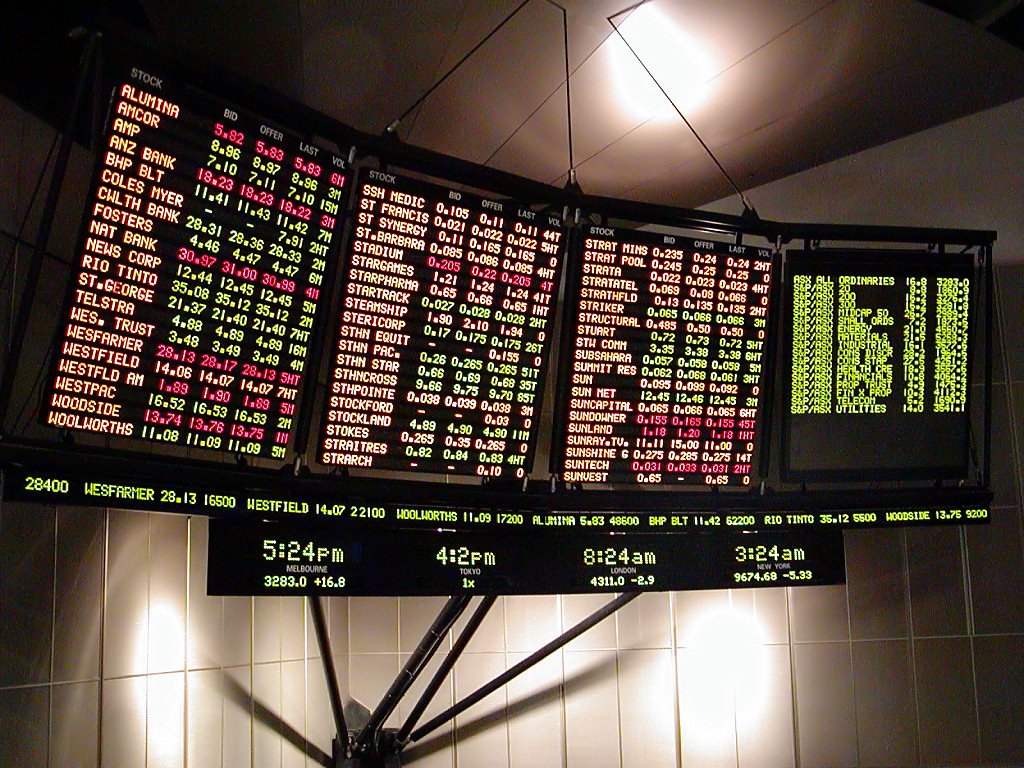
Carbon market update July 2026: carbon prices are more visible than they used to be, but the useful question is still what each price represents. A compliance allowance, a Carbon Offsetting and Reduction Scheme for International Aviation (CORSIA) eligible unit, a voluntary credit and a durable removal can all be quoted per tonne of carbon dioxide equivalent. They do not answer the same buyer question.
The July read is not that carbon markets have become simple. It is that price visibility is improving faster than comparability. Regulated allowance prices are relatively easy to track. Voluntary carbon credit prices still need project type, vintage, registry, claim use and delivery evidence before the number means much.
The Planet Brief's public Carbon Market Intelligence tracker currently follows 14 market indicators and 35 price lanes. Its July 2026 summary is "mixed to maturing": compliance markets are established, integrity rules are tightening, but Article 6 transfers, CORSIA eligibility, durable removals and voluntary price transparency remain uneven.
July 2026 market read
The tracker has 35 carbon price lanes, including 31 priced snapshots and four watch lanes. The clearest public price references are compliance allowances. The hardest comparisons remain voluntary credits, Article 6-authorised units and carbon dioxide removal (CDR) methods, where the boundary behind the tonne changes the meaning of the price.
Carbon prices are visible, but not interchangeable
A carbon price can mean several different things. In the European Union Emissions Trading System (EU ETS), an allowance price reflects scarcity inside a regulated cap. In the United Kingdom Emissions Trading Scheme (UK ETS), the allowance price reflects a separate UK market. In the voluntary carbon market (VCM), a credit price may reflect a project type, a vintage, a registry, a buyer claim or a brokered transaction. In CDR, the price may reflect method cost, contracted future delivery, durability and supplier risk.
That is why the first market question should not be "what is the carbon price?" It should be "which carbon price, for which claim, under which rules?"
| Price lane | July snapshot | What it can tell you | What it cannot tell you |
|---|---|---|---|
| EU ETS allowance | €79.63 per tonne CO2e, checked 3 July 2026 | A public compliance-market benchmark for the European cap-and-trade system. | It is not a voluntary credit price or a recommendation to trade allowances. |
| UK ETS allowance | £56.00 per tonne CO2e, ICE Dec26 public snapshot checked 3 July 2026 | A dated UK allowance comparator beside the EU price. | It is a futures-contract snapshot, not a generic UK carbon credit value. |
| Regional Greenhouse Gas Initiative (RGGI) allowance | US$35.00 per tonne CO2e, Auction 72 clearing price on 3 June 2026 | A US regional compliance-market settlement point. | It does not price voluntary credits or corporate offset claims. |
| California-Quebec allowance | US$28.81 per tonne CO2e, May 2026 joint auction report | A North American linked cap-and-trade auction result. | It should not be treated as a forward price or voluntary-market proxy. |
| Average voluntary carbon credit | US$6.34 per tonne CO2e for 2024 reported transactions | A broad retrospective market average from Ecosystem Marketplace. | It hides large differences between renewable energy, forestry, household devices, blue carbon and removals. |
| Durable CDR methods | US$60.93 to US$1,330.67 per tonne CO2e in the public CDR.fyi method snapshot | Method choice can change removal prices by more than an order of magnitude. | It is not a quote for a specific supplier, delivery date, contract or claim. |
The table is deliberately cautious. It does not try to create one blended carbon price because that would flatten the market in exactly the wrong way. The price of a regulated allowance, a renewable-energy credit, a forest protection credit, a biochar removal and a direct air capture contract can all matter. They matter for different reasons.
Compliance markets are the clearest price anchors
Compliance markets have the cleanest public price references because the unit, rule set and buyer obligation are clearer. The EU ETS, UK ETS and Regional Greenhouse Gas Initiative (RGGI) each provide compliance-market references. The California-Quebec market adds another public auction result from North America.
That does not make compliance prices simple. They still respond to policy, energy markets, industrial demand, auction supply, banking rules and political risk. But they are easier to explain than voluntary credits because the allowance has a defined compliance role. A covered company needs allowances for regulated emissions. A voluntary buyer usually needs a defensible climate claim, and that is a more complicated evidence problem.
For carbon-market readers, the gap between compliance prices and many voluntary credit prices is one of the market's most useful warnings. A low voluntary price may reflect efficient climate finance. It may also reflect old vintage, weak demand, oversupply, poor additionality confidence or a claim that would be difficult to defend in public.
CORSIA and Article 6 are not just extra demand
The Carbon Offsetting and Reduction Scheme for International Aviation (CORSIA) is sometimes discussed as a demand engine for carbon credits. It is more precise to treat it as an eligibility filter. Airlines cannot use any voluntary credit they like. The International Civil Aviation Organization (ICAO) sets programme, unit, vintage, date and other conditions that decide which units can be cancelled for CORSIA compliance.
That matters for price. A credit that is eligible for a specific CORSIA phase may not price like an ordinary voluntary credit. But it also may not have one clean public price, because eligibility, supply, vintage and authorisation details still need to be checked. The July tracker keeps CORSIA as a watch lane rather than pretending there is a single reliable CORSIA price for all eligible units.
Article 6 has a similar boundary problem. Article 6-authorised carbon units are important because corresponding adjustments are meant to prevent the same mitigation outcome being counted by both a host country and a buyer. But authorisation evidence, transfer evidence and registry records are still developing. A public price without those details would not tell a buyer enough.
Voluntary credit prices still need project evidence
The voluntary market has more price data than it had a few years ago, but the number still needs a file behind it. The same broad average can contain renewable energy credits, avoided deforestation credits, cookstove credits, industrial process credits, blue carbon, tree planting and removals. Those categories do not carry the same risk.
Two details are especially important. First, vintage tells the buyer when the credited climate outcome happened. A recent credit and an old credit may not fit the same claim even if the project category looks similar. Second, retirement evidence tells the buyer whether the unit has been taken out of circulation for a named purpose, with serial numbers and registry records that can be checked.
The Integrity Council for the Voluntary Carbon Market (ICVCM) and the Voluntary Carbon Markets Integrity Initiative (VCMI) are part of the discipline now forming around the market. ICVCM focuses on credit integrity. VCMI focuses on company claims. Neither removes the need to inspect the project, unit, vintage, retirement and claim wording.
Removals show why one carbon price is misleading
Carbon dioxide removal is often treated as one category, but the July price data shows why that is too broad. The public CDR.fyi snapshot used in the tracker puts biochar carbon removal at US$135.64 per tonne CO2e and direct air capture with storage at US$516.14 per tonne CO2e. The full durable-method range in the tracker runs from US$60.93 to US$1,330.67 per tonne CO2e.
Those numbers are not interchangeable with avoided-emissions credits. Durable removals can support a different type of claim because they remove carbon dioxide from the atmosphere and store it. But durability, delivery date, monitoring, supplier risk, certification and contract terms still decide whether the price represents usable climate evidence.
The useful comparison is not "cheap credit versus expensive credit". It is "what problem is this unit meant to solve?" A company trying to support a broad climate contribution, an airline meeting CORSIA obligations, a regulated industrial emitter buying allowances and a buyer reserving durable removals for residual emissions are not shopping in the same market.
What to check before the next update
The July market read leaves five checks for the next monthly monitor.
- Whether EU ETS and UK ETS allowance prices move materially after energy-market, policy or auction changes.
- Whether ICAO updates CORSIA eligibility documents in a way that changes usable supply.
- Whether Article 6 authorisation and transfer evidence becomes easier to verify in public records.
- Whether ICVCM and VCMI adoption starts changing buyer behaviour rather than only claims language.
- Whether durable-removal prices move because of delivered tonnes, contracted demand, supplier risk or method-level cost changes.
That is the practical market read for July: more numbers are visible, but the numbers still need boundaries. Carbon markets are becoming easier to monitor. They are not yet easy to compare.
Useful source links
- The Planet Brief Carbon Market Intelligence tracker
- TPB carbon market intelligence metrics JSON
- TPB carbon market intelligence prices JSON
- Trading Economics: EU carbon permits public benchmark
- ICE: UK Allowance Futures public data
- RGGI allowance prices and volumes
- California-Quebec May 2026 joint auction results
- ICAO: CORSIA eligible emissions units
- UNFCCC: Article 6.4 mechanism
- ICVCM Core Carbon Principles
- VCMI Claims Code of Practice
- CDR.fyi carbon removal market data
- CDR.fyi durable carbon removal pricing survey
- Ecosystem Marketplace: State of the Voluntary Carbon Markets 2025
Bottom line
July's carbon market data points in one direction: price is becoming easier to see, but evidence still decides the market.
A visible price can help with budgets, comparison and market monitoring. It cannot prove that a credit is credible, claim-safe, CORSIA-eligible, Article 6-authorised or suitable for a net zero pathway. The tonne still needs its source, boundary, date and use case.
Data checked
Data checked 9 July 2026 against The Planet Brief Carbon Market Intelligence tracker files last updated 2 to 3 July 2026, plus the public source links listed above. Review after the next monthly tracker source check, any material EU ETS or UK ETS price move, a new CORSIA eligibility update, a public Article 6 transfer evidence update, an ICVCM or VCMI claims update, or a major CDR.fyi price-method update.
Information only
This guide is for general information only. It is not financial advice, investment advice, procurement advice, legal advice, tax advice, accounting advice or a recommendation. Carbon allowance prices, carbon credit prices, registry rules, Article 6 authorisations, CORSIA eligibility and public claims guidance can change quickly. Check current source documents and professional advice before making procurement, compliance, investment or public-claim decisions.