
Bristol Harbour is heating 2,500 homes while 6,000 native plants float above it
Bristol Harbour now supports a 3MW heat pump serving 2,500 homes and 700 square metres of floating habitat with more than 6,000 native plants.
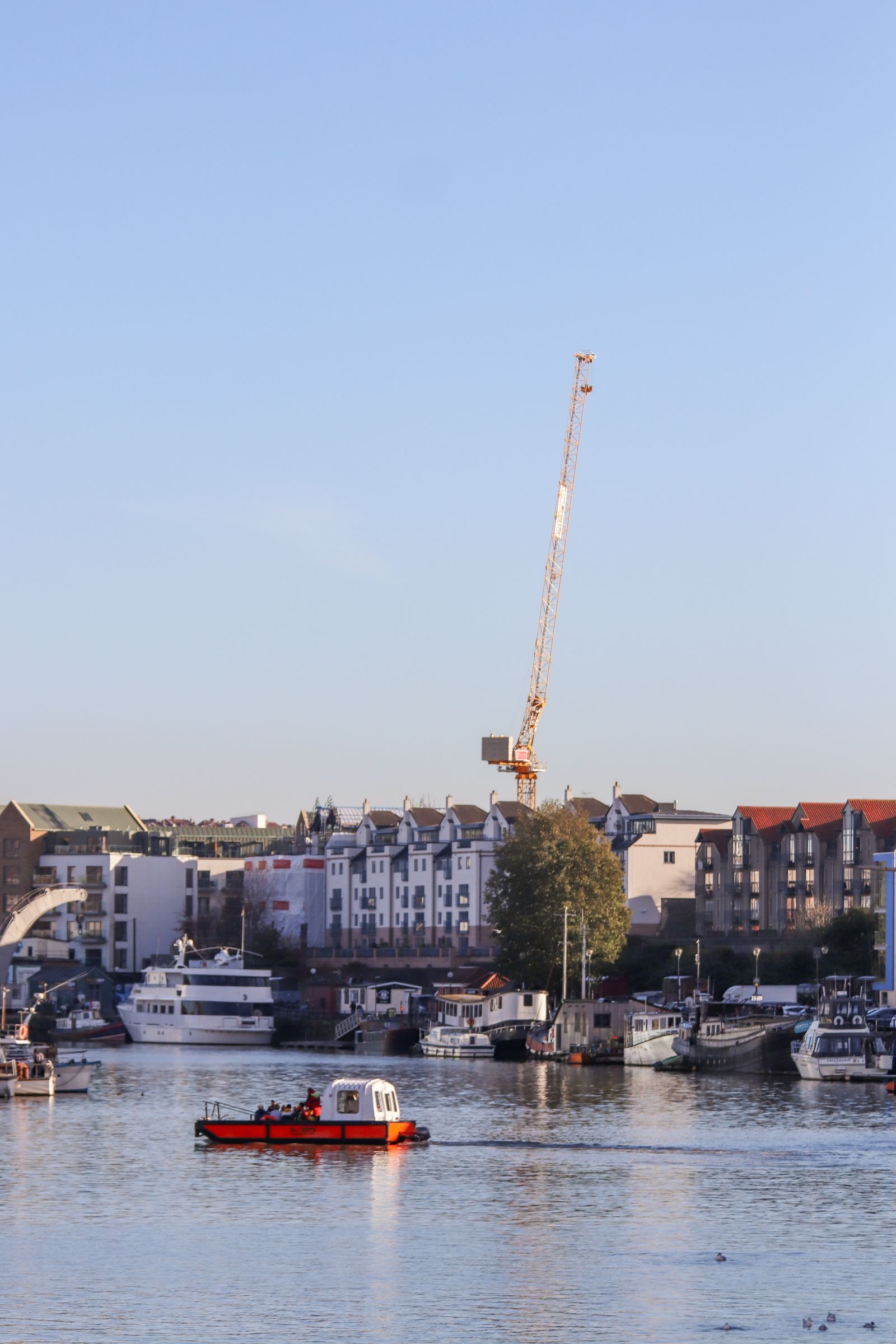
Bristol's Floating Harbour now does more than hold boats. Water from it feeds a 3 megawatt heat pump serving the equivalent of 2,500 homes, while 700 square metres of floating habitat supports more than 6,000 native plants and 24 trees on the surface.
Information only
This article is for general information only. Heat-network coverage, project performance, ecological condition and expansion plans can change. The heat pump and floating habitat are separate projects, and the published figures should not be treated as household energy, bill-saving or ecological-performance guarantees.
The water beside Castle Park looks like a familiar piece of Bristol: moored boats, old quays and a route through the city. Below the surface, pipes draw harbour water into an energy centre. Farther along the waterfront, floating islands carry reeds, flowering plants and small trees.
They are separate projects, built at different times for different purposes. Seen together, they show how a dense city can ask more of the space it already has.
The harbour supplies heat to the city
At Castle Park Energy Centre, a water-source heat pump extracts low-temperature heat from the Floating Harbour and raises it to a useful temperature for Bristol's district heat network. The system has a capacity of 3 megawatts.
Vattenfall, which operates Bristol's heat network, describes it as England's largest harbour-based water-source heat pump. It says the system provides heating and hot water equivalent to the needs of 2,500 homes.
The homes figure describes the scale of heat supplied through the network. It does not mean 2,500 individual properties each have a small heat pump attached to the harbour. Heat is produced centrally and moves through insulated pipes to connected buildings.
That shared system allows the city to use equipment that would be far too large for an individual home. It also changes the practical job of decarbonising heat. Instead of asking every connected building to find room for its own outdoor unit and complete a separate installation, the network can change the sources feeding a common pipe system.
How cold harbour water heats a building
A heat pump does not need its source to feel hot. It needs energy that can be collected and moved.
- Harbour water passes through the heat-extraction system.
- A refrigerant circuit absorbs low-temperature energy from that water.
- A compressor raises the refrigerant's pressure and temperature.
- The resulting heat is transferred into the district network.
- The network carries hot water to connected homes and other buildings.
The electricity used by the compressor still matters. So do network heat losses, operating temperatures and the carbon intensity of the electricity supply. A heat pump's climate value comes from delivering considerably more heat energy than the electrical energy it consumes, not from creating heat without an energy input.
Bristol's longer-term plan is broader than the harbour installation. Vattenfall says it wants the city's buildings to draw on a combination of water-source and air-source heat pumps, electric boilers, thermal storage and waste heat from industrial processes by 2030. The harbour system is one working part of that transition, rather than the whole network.
There is a wetland floating on the same harbour
At Capricorn Quay, modular islands create 700 square metres of floating habitat. Bristol City Council's 2026 to 2028 Ecological Emergency Action Plan records more than 6,000 native plants and 24 trees across the installed area.
The first section was installed in 2024 and the council now describes it as thriving and well established. It sits alongside pontoons and moorings rather than replacing the harbour's human uses.
The habitat works mostly below the part visible from the quay. Plant roots hang into the water, creating shelter and nursery space for fish. Integrated pools provide access for diving birds and otters. Above the water, the planting can provide food and movement routes for insects, including butterflies, bees and other pollinators.
Trees growing on a floating platform in a city harbour are an arresting sight. Their ecological value will depend on less dramatic work: plant survival, water conditions, maintenance and whether animals actually use the structures over time.
What has been delivered, and what is planned?
| Project | Delivered | Next evidence |
|---|---|---|
| Castle Park water-source heat pump | 3MW system operating through the Bristol heat network; Vattenfall reports heat and hot water equivalent to 2,500 homes. | Annual heat output, electricity use, network carbon intensity, reliability and further building connections. |
| Capricorn Quay floating habitat | 700 square metres installed with more than 6,000 native plants and 24 trees. | Plant survival, species use, water-quality evidence and long-term maintenance. |
| Harbour habitat expansion | Not yet delivered. | The council plans another 5,580 square metres across six locations, with work scheduled to begin in 2028. |
The planned expansion is large beside the existing habitat, but it remains a plan. If delivered in full, it would take the total floating habitat beyond 6,000 square metres. Procurement, funding, design, harbour operations and maintenance will decide how much reaches the water.
Why put habitat in an artificial harbour?
Bristol's Floating Harbour is an engineered water body, cut off from the river's tidal rise and fall more than two centuries ago. The Environment Agency currently classifies it as having moderate ecological status. Phosphate from continuous sewage discharge is listed among the reasons it is not achieving good status.
Floating islands cannot solve that water-quality problem. They can add structure to hard-edged urban water where natural banks, reed beds and shallow margins are scarce.
This is a common problem in cities. Quay walls are useful for navigation and development but offer little of the variation found along a natural riverbank. Roots, pools and planted edges create places to feed, hide and reproduce without requiring a city to remove the harbour walls.
The distinction matters. Habitat additions can make an artificial waterway more hospitable while pollution and wider ecological condition still require separate action.
The quiet work that keeps both projects useful
Visible installation is only the beginning for both systems.
A heat network needs customers, reliable plant, maintained pipes and careful control of supply temperatures. Its emissions depend on what produces the heat and electricity over time. Connecting more buildings can improve the use of shared infrastructure, but construction cost and disruption can slow expansion.
The floating islands also need care. Bristol City Council says Biomatrix holds an initial maintenance contract, with longer-term care managed by the Harbour Master's office and a local volunteer group. Plants can fail, structures can deteriorate and a habitat designed on paper may not be used by the intended wildlife.
Monitoring turns both projects from attractive infrastructure into evidence. For the heat pump, that means energy and operating data. For the islands, it means plant establishment, water condition and records of fish, birds, mammals and insects.
A harbour doing two new jobs
The heat pump has operated since 2022. The first floating habitat arrived in 2024. They were brought together in the public eye this July when the government's Energising Britain event took visitors onto the harbour to see both.
The recent news is therefore not that Bristol built everything in a week. It is that the infrastructure is in place, the planted area has become established and the city has published a route towards a much larger habitat network.
Industrial harbours were built to move goods and power urban growth. Bristol's still carries boats. It is also carrying heat through pipes and giving roots somewhere to hang in the water. The old harbour has started working for the city in two new ways.
Data checked
Checked 11 July 2026 against Bristol City Council's Ecological Emergency Action Plan 2026 to 2028, Vattenfall's Bristol heat-network page, the Environment Agency Catchment Data Explorer and the government's July 2026 Energising Britain announcement. Review after new heat-network performance or connection data, ecological monitoring, a water-status update or delivery of the planned habitat expansion.