
UK green jobs have grown 28% since 2015, reaching 652,100
The UK had an estimated 652,100 green jobs in 2024, up 28% since 2015. See where employment grew, what counts and why 2024 dipped.
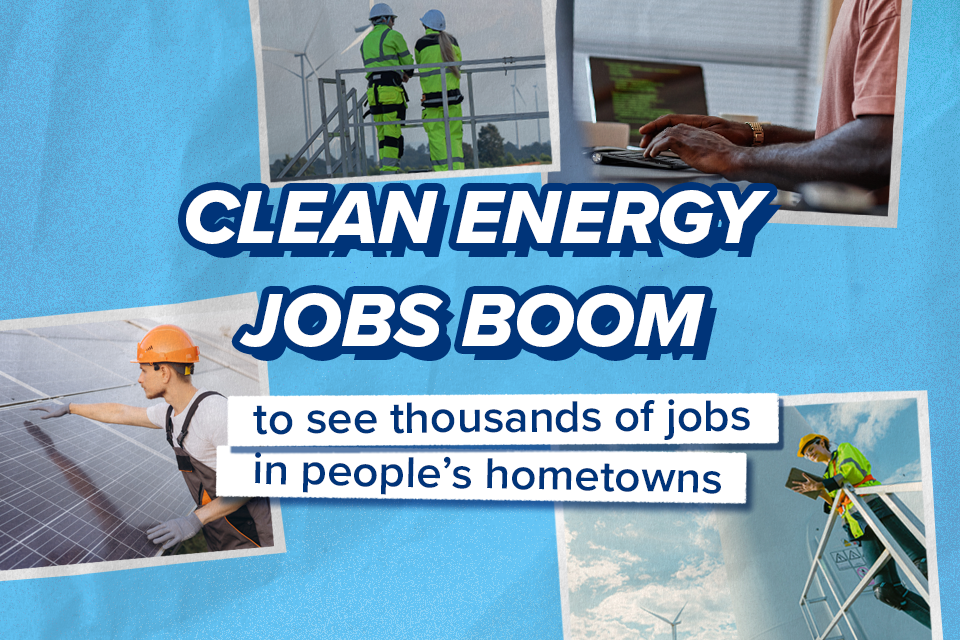
The United Kingdom had an estimated 652,100 full-time-equivalent green jobs in 2024, according to the Office for National Statistics. That is 142,000 more than in 2015, an increase of 27.8% across work ranging from renewable energy and efficient products to waste, low-carbon transport and nature protection.
A solar installer, a turbine technician and someone making insulation can all appear in the headline measure. So can jobs in waste management, environmental charities, water treatment, nuclear power and the production of energy-efficient goods.
Because the measure spans so many kinds of work, its definition determines which jobs enter the total and how the figure should be compared over time.
The Office for National Statistics defines one as employment in an activity that protects or restores the environment, including work that mitigates or adapts to climate change. Its headline estimate follows activities and industries, rather than judging the environmental virtue of every employer or job title.
There are 142,000 more green jobs than in 2015
The comparable series begins with an estimated 510,100 full-time equivalents in 2015. By 2024, it had reached 652,100.
Renewable energy contributed the largest part of the net increase, adding 38,500 full-time equivalents. Nuclear power added 28,500, low-carbon transport added 24,900 and waste activity added 18,100.
| Measure | Official estimate | How to read it |
|---|---|---|
| Total green jobs, 2024 | 652,100 full-time equivalents | A provisional industry-based estimate, not a headcount of named workers. |
| Change since 2015 | Up 142,000, or 27.8% | Long-run growth across several environmental and low-carbon activities. |
| Change from 2023 | Down 10,800 | The series did not rise every year; efficient products and waste recorded the largest latest declines. |
| Interest in future green work | 40% of working adults | A separate 2025 survey measure of people very or somewhat interested in a green job. |
The gain estimates work already present in the economy, rather than jobs promised by future projects. Employment claims attached to individual announcements can overlap or describe temporary construction peaks. The proposed Port of Tyne Clean Energy Park, for example, carries a forecast of up to 12,000 jobs that still depends on consent, investment, tenants and construction.
Efficient products, waste and renewables employ nearly half
Three areas accounted for 47.9% of the headline total in 2024. Energy-efficient products employed an estimated 130,000 full-time equivalents, waste activity 119,200 and renewable energy 63,200.
This is a broader employment base than wind farms and solar arrays alone. Decarbonising buildings requires equipment, design, installation and maintenance, while a lower-waste economy needs collection, sorting, repair and resource management. Clean power adds manufacturing, construction, networks and operations.
The work is spread through ordinary supply chains: some jobs carry an obvious green title, while others sit inside factories, engineering firms, councils and service businesses whose output contributes to environmental protection or lower emissions.
The latest year moved backwards
Between 2023 and 2024, the estimate fell by 10,800 full-time equivalents. Energy-efficient products dropped by 17,600 and waste activity by 10,100. Increases elsewhere offset part of those losses, including a rise of 9,200 in nuclear power.
One weaker year does not erase the 28% increase since 2015, but it shows that transition employment is not secured simply because policy targets exist. Orders can slow, programmes can change and proposed projects can fail to become steady work.
The figures are survey-based and provisional. Changes can reflect sampling uncertainty, revised business responses or shifts in how employment is reported between activities. Some grid, storage and low-carbon transport work is not yet fully captured because suitable data sources are missing.
The UK has built a larger base of environmental and low-carbon employment over the decade, but the latest fall shows that this work still depends on dependable demand.
Green work reaches beyond green industries
The Office for National Statistics also looks at firms and occupations using different methods. Those estimates overlap and should not be added to the headline total.
In a 2025 survey, 13% of working adults said at least part of their main job was green after responses were checked against the official definition. Forty per cent of working adults without a green main job said they were very or somewhat interested in having one, and 39% expressed interest in training for one.
Interest in green work only translates into employment when training connects to real vacancies. A short course does not create a career when employers lack orders, projects are delayed or qualifications do not match local demand, so durable green-skills policy has to start with visible work and build training around it. The UK heat-pump installer workforce shows the distinction clearly: around 10,000 trained and active people currently amount to about 4,000 full-time-equivalent installers.
Orders and projects will decide the next jobs gain
The sectors behind the long-run increase point towards the physical work ahead: renewable generation, nuclear projects, low-carbon transport, efficient buildings and better use of materials.
Each depends on more than an employment target. Planning decisions, grid connections, stable retrofit programmes, factories, procurement and project finance determine whether vacancies appear and persist. The quality of the work matters too, including pay, security, location and whether people in declining high-emission sectors can move without losing livelihoods.
Britain has 142,000 more full-time-equivalent green jobs than it did in 2015. Further growth will depend less on larger employment promises than on whether the flow of orders and projects gives that workforce enough useful work to do.
Useful source links
- Office for National Statistics: Environment, climate and nature insights, UK 2026
- Office for National Statistics: Estimates of green jobs, UK, March 2026
- Office for National Statistics: Green jobs dataset
- Feature image source: Department for Energy Security and Net Zero under the Open Government Licence
Data checked
Checked 12 July 2026 against the Office for National Statistics Environment, climate and nature insights 2026 release and its March 2026 green-jobs bulletin and datasets. Review after revised 2024 estimates, the next green-jobs bulletin or a material change to the official definition or methodology.
Information only
This article is for general information only. The 2024 green-jobs estimates are provisional official statistics in development, use several data sources and can be revised. Full-time-equivalent jobs are not the same as a count of individual workers.