
EU ETS vs UK ETS: how the two carbon markets compare in 2026
EU ETS vs UK ETS explained for 2026: coverage, allowances, aviation, free allocation, prices, CBAM links and business exposure.
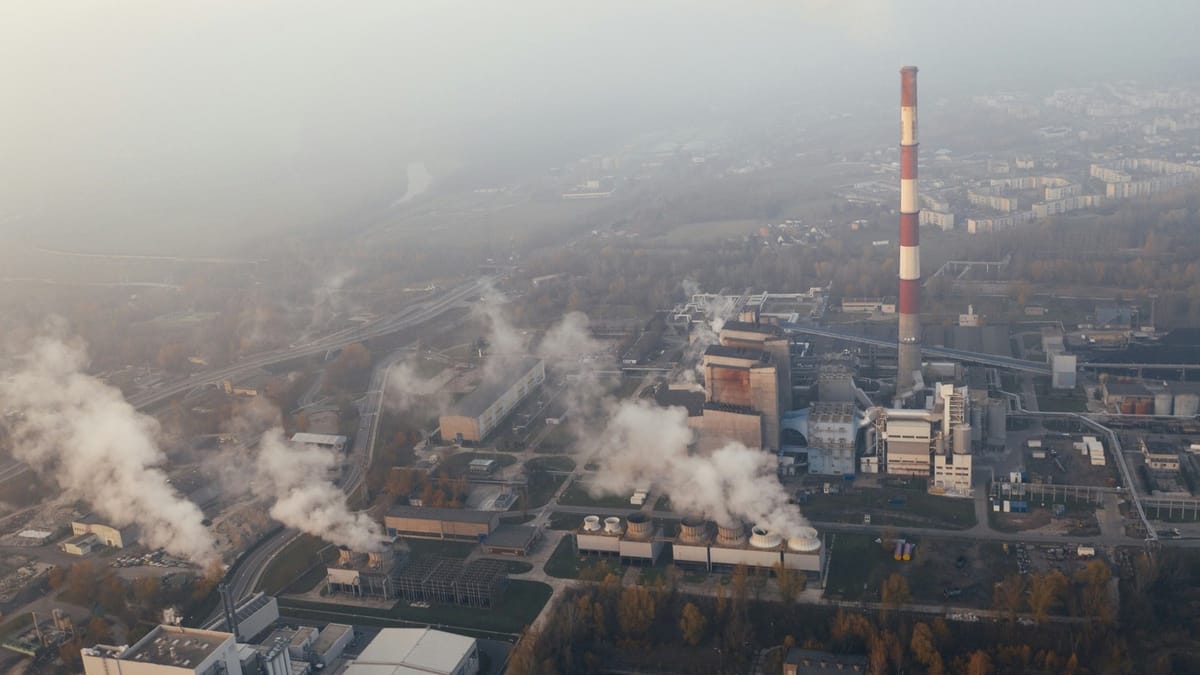
The European Union Emissions Trading System (EU ETS) and the United Kingdom Emissions Trading Scheme (UK ETS) look similar from a distance. Both are cap-and-trade carbon markets. But they are now separate systems, with separate allowances, separate prices and separate policy choices.
The useful way to compare the EU ETS and UK ETS is not to ask which one is "greener". The better question is what each market makes visible. A covered factory, power station, aircraft operator or ship owner does not simply face a climate target. It faces a compliance calendar, a monitoring plan, an allowance price, a registry process and a set of policy expectations that can move costs through supply chains.
After Brexit, the UK no longer participates in the EU ETS. It has its own UK ETS. The two systems still share the same basic logic, but a business exposed to both markets has to track two rulebooks, two allowance instruments and two political paths.
The short version is this: the EU ETS is the larger, more liquid and longer-running European carbon market. The UK ETS is the UK's separate post-Brexit carbon market. They are related by design history, but they are not interchangeable.
EU ETS and UK ETS at a glance
| Question | Short answer |
|---|---|
| Are the EU ETS and UK ETS the same system? | No. They are separate cap-and-trade systems with separate allowances, registries, prices and policy decisions. |
| Can a UK Allowance be used for EU ETS compliance? | No. UK Allowances (UKAs) and European Union Allowances (EUAs) are separate instruments unless a future linking arrangement changes that. |
| Which is bigger? | The EU ETS is much larger. It covers the European Union and linked European Economic Area markets. The UK ETS covers the United Kingdom. |
| Do both affect aviation? | Yes, but route coverage differs. Airlines may also need to understand CORSIA for international aviation. |
| Why should non-regulated companies care? | Carbon costs can flow through power prices, materials, aviation, freight, construction products and supplier contracts. |
What is an emissions trading system?
An emissions trading system sets a cap on covered emissions and turns part of that cap into allowances. Regulated operators have to monitor their emissions and surrender allowances for the tonnes they emit. If they emit less, they may need fewer allowances. If they emit more, they need more allowances.
The price signal is the point. A cap-and-trade system is designed to make emissions financially visible, while leaving companies to decide whether to buy allowances, reduce emissions, change processes, switch fuels, invest in efficiency or pass some costs through to customers.
That does not make an emissions trading system simple. The allowance price is only one part of the system. The compliance architecture also includes monitoring, reporting, verification, free allocation, auctions, penalties, registry controls, sector rules and political decisions about the cap.
What is the EU ETS?
The EU ETS is the European Union's main carbon market. It began in 2005 and is usually described by the European Commission as a cornerstone of EU climate policy. It covers emissions from power and heat generation, energy-intensive industry, aviation within its defined scope and maritime transport as shipping is phased into the system.
The system works by limiting the total number of allowances available and reducing that cap over time. Companies covered by the system must surrender enough allowances to cover their verified emissions. The EU ETS has also been tightened through the EU's Fit for 55 climate package, which affects the pace of emissions reduction and the way free allocation interacts with the EU Carbon Border Adjustment Mechanism (CBAM).
For most readers, the EU ETS is important because it is not just a carbon market. It is a policy signal. It affects power generation, industrial production, carbon-intensive materials, shipping, aviation and the investment case for lower-carbon alternatives.
What is the UK ETS?
The UK ETS replaced the UK's participation in the EU ETS from 1 January 2021. It covers power, energy-intensive industry and aviation within its UK scope. It is run by the UK ETS Authority, made up of the UK Government, Scottish Government, Welsh Government and the Department of Agriculture, Environment and Rural Affairs in Northern Ireland. For the standalone scheme guide, use UK ETS explained.
The UK system uses UK Allowances rather than EU Allowances. Those allowances are auctioned, allocated and surrendered inside the UK system. A UK installation cannot use a European Union Allowance for UK ETS compliance, and an EU installation cannot use a UK Allowance for EU ETS compliance.
The UK ETS therefore matters for two reasons. It creates a domestic carbon price for covered UK emissions, and it creates policy choices that can diverge from the European Union. If the UK cap, auction supply, free allocation or sector coverage changes differently from the EU system, prices and incentives can separate.
EU ETS vs UK ETS: the main differences
| Feature | EU ETS | UK ETS |
|---|---|---|
| Jurisdiction | European Union and linked European Economic Area coverage. | United Kingdom. |
| Main allowance | European Union Allowance (EUA). | UK Allowance (UKA). |
| Regulated sectors | Power, industry, aviation within scope and maritime transport as shipping is phased in. | Power, energy-intensive industry and aviation within UK scope. |
| Policy direction | Linked to EU climate law, Fit for 55 reforms and the EU CBAM. | Set by the UK ETS Authority and UK climate-policy decisions. |
| Market size | Larger and generally more liquid. | Smaller and more exposed to UK-specific policy choices. |
| Can allowances be swapped? | No. EUAs are for EU ETS compliance. | No. UKAs are for UK ETS compliance. |
The difference that matters most is separation. A company cannot assume that "European carbon price" means one number. A supplier may face EU ETS exposure. A UK site may face UK ETS exposure. An airline may face EU ETS, UK ETS, the Carbon Offsetting and Reduction Scheme for International Aviation (CORSIA) or more than one regime depending on the route.
How compliance works in practice
Compliance is not just a purchase decision. Covered operators need to know which installation, activity or aircraft operator is in scope, which monitoring plan applies, how emissions are measured, when verified reports are due and when allowances must be surrendered.
That creates a practical difference between price risk and compliance risk. Price risk is the risk that allowances become more expensive. Compliance risk is the risk that the operator fails to monitor, report, verify or surrender correctly. A business can budget for allowances and still fail operationally if ownership of the process is unclear.
For larger companies, the best internal owner is often shared. Sustainability teams understand emissions data. Finance teams understand price exposure. Legal and compliance teams understand obligations. Operations teams understand the physical assets. Problems tend to appear when one team assumes another is handling the registry, verification or procurement process.
Prices: why EU allowances and UK allowances can diverge
European Union Allowances (EUAs) and UK Allowances (UKAs) can move in the same direction when policy expectations, energy prices or industrial activity affect both markets. But they can also diverge because the markets have different supply, demand, liquidity and political signals.
That matters for budgeting. A UK manufacturer exposed to the UK ETS should not simply use an EU allowance price in forecasts. A European supplier should not use a UK price. A procurement team that buys cement, steel, aluminium, electricity or aviation services should understand which market affects the supplier.
The most cautious approach is to treat EU ETS and UK ETS prices as separate inputs. Use current market data for budgets, show the date used, stress test against higher and lower prices, and update forecasts when policy decisions change.
Free allocation and carbon leakage
Both systems use free allocation for some sectors. Free allocation is designed to reduce carbon leakage risk, where production could shift to jurisdictions with lower carbon costs. It does not mean emissions have no cost. It means an operator may receive some allowances without paying at auction, reducing immediate cash exposure.
Free allocation is one of the most politically sensitive parts of emissions trading. Give away too many allowances and the carbon price weakens. Remove support too quickly and exposed industries argue that they face unfair competition. This is why emissions trading increasingly links to carbon border adjustment mechanisms.
The EU CBAM and the planned UK CBAM are both responses to the same problem: how to maintain a domestic carbon price without simply moving emissions-intensive production overseas. For importers, that means the emissions trading conversation no longer stops at the factory gate. It can become a trade-data and supply-chain issue.
Aviation: EU ETS, UK ETS and CORSIA
Aviation is where the comparison becomes easiest to misunderstand. The EU ETS and UK ETS both cover aviation within defined scopes. The Carbon Offsetting and Reduction Scheme for International Aviation (CORSIA) is a separate international aviation framework. It does not use EUAs or UKAs. It uses eligible emissions units for certain international aviation offsetting obligations.
That means the starting point for an airline is not "which carbon market is best?" It is the route map. A route may sit inside EU ETS coverage, UK ETS coverage, CORSIA coverage or another national or regional rule. The compliance instrument, deadline and claim logic can differ.
For a fuller aviation comparison, read CORSIA vs EU ETS and the main CORSIA explained guide.
Maritime: why shipping makes the EU system broader
The EU ETS is also expanding through maritime transport. Shipping emissions are being phased into the EU system, which makes the EU ETS increasingly relevant to freight, ports, shipping lines and companies with exposure to maritime supply chains.
The IMO Net-Zero Framework adds a separate global layer. Unlike the EU ETS, it is built around a shipping fuel standard, emissions pricing mechanism and dedicated transition fund. This is another reason the EU ETS and UK ETS should not be treated as the same market. Sector coverage is not static. If one system expands faster than the other, the practical exposure for businesses can change even when the headline policy language sounds similar.
Where carbon-price exposure appears outside regulated sites
Many businesses are not directly regulated under either system. That does not mean they have no exposure. Carbon costs can sit inside supplier prices, electricity contracts, construction materials, freight, aviation, product margins and customer procurement questions.
| Business area | Possible ETS exposure | Question to ask |
|---|---|---|
| Electricity and energy | Carbon prices can influence power generation costs and wholesale price dynamics. | How much carbon-price exposure is embedded in the energy contract? |
| Construction | Steel, cement, aluminium and glass suppliers may face carbon costs. | Can suppliers provide product-level emissions data and lower-carbon options? |
| Aviation and travel | Airlines may face EU ETS, UK ETS and CORSIA obligations depending on route. | Does travel policy consider route, carrier, fare class and emissions exposure? |
| Imports | Carbon border rules can create reporting and cost exposure for selected imported goods. | Do suppliers provide embedded emissions data in a usable format? |
| Supplier contracts | Suppliers may pass through allowance costs or use them in pricing negotiations. | Is carbon-price pass-through explicit, capped or hidden in general pricing? |
This is where the EU ETS and UK ETS become relevant to smaller companies. A small business may not be buying allowances, but it may buy power, flights, materials, logistics or goods from suppliers that are exposed to carbon pricing. For Scope 3 reporting, see the guide to Scope 3 emissions for SMEs.
Allowances are not carbon credits
Allowances and carbon credits are often discussed together, but they are not the same thing. An allowance in an emissions trading system is a compliance unit inside a capped market. It gives a regulated operator the right to emit one tonne of carbon dioxide equivalent within the rules of that system.
A voluntary carbon credit is different. It normally represents an emissions reduction or removal outside the buyer's own operations, issued through a carbon crediting programme and retired against a voluntary claim. That credit might be useful for financing climate action, but it does not replace an EU ETS or UK ETS allowance for compliance.
For the difference between compliance markets and voluntary credits, read how carbon credits work and the voluntary carbon market explainer.
Linking: could the EU ETS and UK ETS reconnect?
Linking the EU ETS and UK ETS would mean connecting the two systems so that allowances could be recognised across markets under agreed rules. In theory, linking can improve liquidity and reduce price divergence. In practice, it is politically and technically difficult because the systems need compatible rules, caps, governance and enforcement.
For now, the safest assumption is separation. Businesses should not build procurement or compliance processes around a future link unless and until a formal agreement is in place.
What to monitor in 2026
| Signal | Why it matters |
|---|---|
| Allowance prices | EUAs and UKAs can diverge, affecting budgets and supplier pass-through. |
| Cap and auction supply | Changes to supply can affect scarcity and price expectations. |
| Free allocation changes | Allocation rules can shift cost exposure for energy-intensive sectors. |
| CBAM implementation | Border rules can move carbon-pricing exposure into import data and customs processes. |
| Aviation and shipping rules | Route and transport exposure can change as schemes evolve. |
| Linking discussion | Any formal progress on linking could affect price expectations and compliance planning. |
Practical checklist for businesses
- Identify whether any sites, routes or subsidiaries are directly regulated under EU ETS or UK ETS.
- Separate EUA and UKA exposure in budgets and risk registers.
- Check whether suppliers pass through carbon costs explicitly or indirectly.
- Ask high-impact suppliers for emissions data, product-level information and carbon-cost assumptions.
- Map aviation routes against EU ETS, UK ETS and CORSIA exposure.
- Prepare for carbon border reporting if importing covered goods into the UK or EU.
- Review contract language for carbon-price adjustment clauses.
- Keep the date of each allowance price assumption visible in forecasts.
Bottom line
The EU ETS and UK ETS are similar in design but separate in law, price and policy direction. Treat them as two related carbon markets, not one European carbon price. The practical question is where each system touches your sites, routes, suppliers, imports or investment exposure.
EU ETS vs UK ETS FAQ
Is the UK still part of the EU ETS?
No. The UK left the EU ETS and launched the UK ETS from 1 January 2021. The UK system is separate.
Can EUAs be used in the UK ETS?
No. European Union Allowances (EUAs) are used for EU ETS compliance. UK Allowances (UKAs) are used for UK ETS compliance.
Which sectors are covered by the UK ETS?
The UK ETS covers power, energy-intensive industry and aviation within UK scope. Always check current GOV.UK guidance for exact activity and threshold rules.
Does the EU ETS cover shipping?
Yes. Maritime transport is being phased into the EU ETS. That makes the EU system relevant to shipping exposure and some freight-related cost discussions.
Are ETS allowances the same as offsets?
No. Allowances in an emissions trading system are compliance units inside a regulated cap-and-trade system. Offsets or voluntary carbon credits are project-based units and cannot be used as normal substitutes for compliance allowances.
Why does this matter for investors?
Carbon pricing can affect utilities, industrials, airlines, shipping, construction materials and companies exposed to carbon-intensive supply chains. It can also influence clean-technology investment cases and climate-risk analysis.
Useful source links
- European Commission: EU Emissions Trading System overview
- European Commission: scope of the EU ETS
- GOV.UK: participating in the UK ETS
- GOV.UK: UK ETS aviation compliance
- GOV.UK: UK Carbon Border Adjustment Mechanism factsheet
- ICAO: CORSIA overview
Data checked
This article was checked in June 2026. EU ETS and UK ETS rules, allowance prices, aviation treatment, maritime coverage, free allocation and carbon border policy can change. Check current European Commission, GOV.UK and regulator guidance before relying on any compliance, trading or procurement decision.