
Best reusable coffee cups UK: leakproof, café-sized and easy to clean
Best reusable coffee cups UK guide. Compare KeepCup and Circular&Co by leak resistance, café sizing, cleaning, materials and replacement parts.
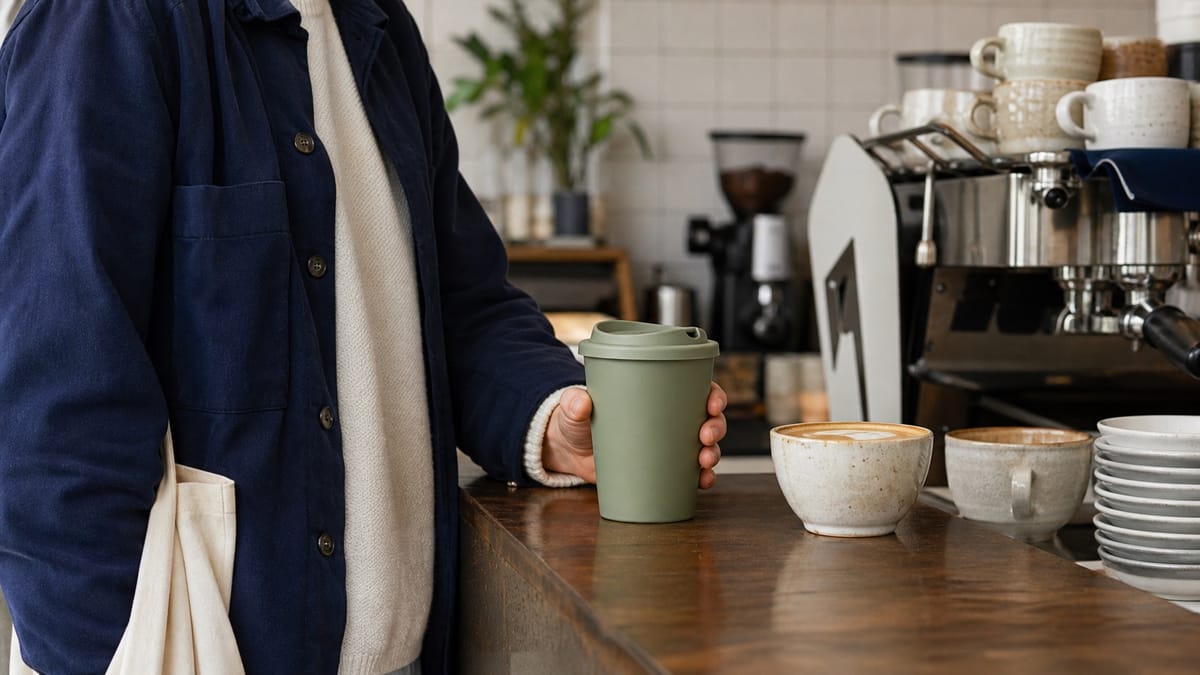
A reusable cup only cuts waste if it is carried, cleaned and used often. The best choice is not necessarily the most elaborate one. It is the cup that fits your usual café order, seals well enough for your journey and is easy enough to wash that it does not remain in a cupboard.
This guide contains Amazon affiliate links. As an Amazon Associate, The Planet Brief may earn from qualifying purchases.
If you want one answer
Our first choice: KeepCup Original 12oz
The 12oz size suits a common UK medium coffee order, the lightweight plastic body is easier to carry than glass, and KeepCup sells replacement lids, plugs, bands and cups rather than treating the product as disposable when one part wears out.
Choose it if: you want a light everyday café cup that is easy to take apart and clean.
Skip it if: you need a fully leakproof bottle for a bag, prefer drinking from glass or usually order a smaller flat white.
Check the KeepCup Original 12ozWhy it leads: the dimensions, capacity, care instructions and replacement-part route are published clearly. The recommendation is based on those published specifications rather than a hands-on TPB product test. Read the manufacturer's specification.
Reusable coffee cups to compare
The options below solve different problems. KeepCup's glass models feel more like drinking from a conventional cup but weigh more. Circular&Co offers a more secure closing mechanism for people who prioritise carrying a cup in a bag. Check the exact product page for the current lid, capacity, care instructions and replacement parts before ordering.
Glass route
KeepCup Brew 16oz
A larger glass cup for long drinks and people who prefer a rigid drinking vessel. The cork or silicone band helps with handling, but the cup is heavier than the Original and needs more care in a bag.
Check the KeepCup Brew 16ozBest for larger drinks. Skip it if weight, breakage or compact storage matters more than the glass drinking experience.
Small coffee route
KeepCup Brew 6oz
A compact glass option for flat whites, cortados and smaller drinks. It avoids carrying a large cup for a small order, but it will not suit people who normally buy medium or large coffees.
Check the KeepCup Brew 6ozMeasure the drink you usually order. Six ounces is deliberately small.
More secure closure
Circular&Co reusable coffee cup
Circular&Co describes its cup as fully leakproof when closed correctly and uses recycled single-use paper cups in its outer insulation layer. It is the stronger route when bag carrying matters more than a simple café lid.
View the Circular&Co cupThis is a non-affiliate manufacturer link. Check the opening mechanism and cleaning instructions before choosing it.
If none of these fits your preferred size or lid, compare current reusable coffee cups on Amazon UK. Treat unfamiliar marketplace claims cautiously and look for a named manufacturer, precise capacity, care instructions and replacement parts.
What size reusable coffee cup do you need?
Start with the drink rather than the cup: 6oz suits a cortado or small flat white, while 8oz covers many smaller café drinks. A 12oz cup is a practical default for a medium latte, cappuccino or filter coffee; 16oz works for larger drinks but takes more space and can encourage buying more coffee than you wanted.
| Nominal size | Likely fit | Main trade-off |
|---|---|---|
| 6oz / about 177ml | Cortado, small flat white | Too small for many standard café orders |
| 8oz / about 227ml | Flat white, smaller latte or filter coffee | Less room for larger milk drinks |
| 12oz / about 340ml | Common medium café drinks | Bulkier than a compact cup |
| 16oz / about 454ml | Large latte, tea or filter coffee | Heavier and harder to carry |
Café naming is not standardised, so take a cup you already own or check the volume of your usual order. A cup that is consistently too small creates spills. One that is much too large takes up bag space and may be left behind.
Leakproof does not always mean the same thing
Many reusable coffee cups use a splash-resistant drinking lid, not a sealed bottle cap. That may be enough for walking from a café to an office, but not for carrying the cup sideways beside a laptop. If a manufacturer says only that a lid is splashproof, assume the cup should remain upright.
For bag carrying, look for an explicit leakproof claim, a locking closure and clear instructions for sealing it. Even then, test a new cup with cold water over a sink before trusting it beside electronics. Coffee residue, a misaligned seal or a worn component can change performance.
Cleaning is part of the buying decision
A complicated lid can become unpleasant quickly if milk or coffee remains trapped inside it. Check whether the lid comes apart without tools, whether seals can be removed, and whether the manufacturer publishes dishwasher guidance. A cup that is technically dishwasher-safe may still need the small components separated.
Wash the cup soon after use and let every part dry fully before reassembly. Smell is often a lid problem rather than a cup-body problem. Replacement seals and plugs are therefore more valuable than they first appear.
Plastic, glass or stainless steel?
Lightweight plastic is convenient for daily carrying and less likely to break. Glass gives a familiar drinking surface and does not retain flavours easily, but it weighs more and can break. Stainless steel is durable and can retain heat well, although insulated models can be heavier and may alter the drinking experience.
No material wins in every situation. Manufacturing impacts vary, and published lifecycle comparisons depend on assumptions about washing, electricity, breakage and how often the cup replaces a disposable one. Repeated use matters more than choosing a fashionable material and abandoning it.
Replacement parts can decide how long the cup lasts
Lids, seals, plugs and bands wear out or get lost before most cup bodies fail. Before buying, check whether the manufacturer sells those parts separately and whether they are available in the UK. A replaceable lid can turn a damaged cup from waste back into a useful object.
The same logic applies to other reusable products. Our reusable water bottles guide compares capacity, cleaning and replacement routes, while the compost bins guide looks at a different household waste decision. For gifts, check whether the recipient actually wants the product before using our sustainable gifts guide.
When not to buy one
There is little reason to buy another reusable cup if you already own one that works, or to give one to somebody who rarely buys takeaway drinks. A cup will not change a routine by itself either: if it is awkward to carry or wash, disposables may return while the reusable cup gathers dust.
A café's ceramic cup is often the simplest option when you are drinking in. For takeaway habits, keep the reusable cup beside the item you never forget, such as keys or a work bag. Regular use is the environmental test that matters.
Sources
- KeepCup: Original cup specification and care
- KeepCup: replacement parts
- Circular&Co: reusable coffee cup specification
- UN Life Cycle Initiative: cups and alternatives
Data checked 2 August 2026. Product capacities, care instructions and replacement routes were checked against the manufacturer pages above. Amazon listings, sellers and availability can change, so confirm the exact model before buying.
Affiliate disclosure: TPB may earn from qualifying Amazon purchases, at no extra cost to you.
Know this subject well? Send evidence, corrections or a useful lead to hello@theplanetbrief.com.