
Solar Panels Uk 2026 Costs Savings Payback
A detailed UK guide to solar panel costs, savings, payback, export payments, battery storage and what households should check before installing solar in 2026.
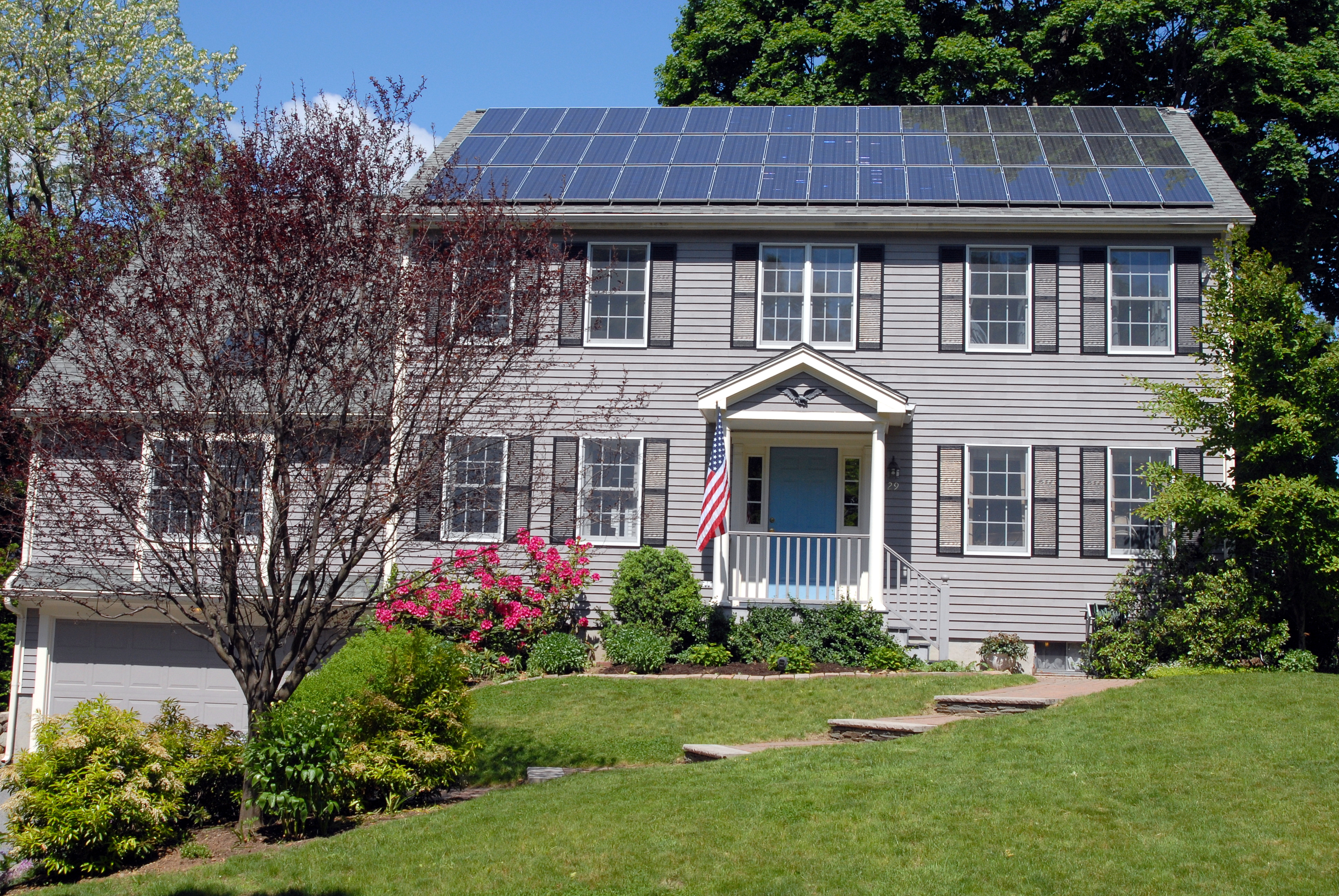
Solar panels are one of the more visible home energy upgrades, but the financial case is not one-size-fits-all. The return depends on roof space, orientation, self-consumption, export payments, electricity prices, battery choices and how long you expect to stay in the property.
Short answer: solar can be attractive for homes with a suitable roof and daytime electricity use, especially where the system is sized around real consumption rather than maximum roof coverage. A battery can improve self-consumption, but it also adds cost and should be tested against the household's usage pattern.
This guide connects with our articles on sustainable tech, energy monitoring plugs, home battery storage, the energy price cap, heat pumps and reducing home energy bills. For the national buildout picture behind household decisions, read our Progress checks on UK solar capacity in 2026 and UK rooftop solar progress.
What drives solar payback?
The solar payback calculation has four moving parts: what the system costs, how much electricity it generates, how much of that electricity you use at home, and what you earn for exported power. A system that looks cheap but is poorly specified can perform worse than a more carefully designed system. A system that looks expensive may be reasonable if it includes good equipment, scaffolding, monitoring, bird protection, warranties and proper aftercare.
| Factor | High-impact question | Why it matters |
|---|---|---|
| Roof orientation | Is the roof south, east, west or shaded? | Generation profile changes across the day and year. |
| Self-consumption | Can you use electricity when panels generate? | Using your own power usually beats exporting it at a lower rate. |
| Export tariff | What rate will you receive for exported electricity? | Export assumptions can materially affect payback. |
| Battery storage | Does the battery reduce enough grid import to justify the cost? | A battery can help, but only if cycled usefully. |
| Future loads | Will you add an EV (electric vehicle), heat pump or home battery later? | Future electricity demand can change system sizing. |
Should you maximise roof coverage?
Not automatically. A larger system may generate more electricity, but if much of it is exported at a low rate, the extra panels may have a weaker return. A larger system can still make sense if you expect higher future electricity demand, but the quote should show generation, self-consumption and export separately.
Ask installers for at least two options: a sensible base system and a larger system. Compare annual generation, assumed self-consumption, expected export, inverter choice, warranty and net cost after any finance charges.
Solar with a battery
A battery stores surplus solar electricity for later use. It can increase self-consumption, reduce evening grid import and support time-of-use tariff strategies. But it also has an upfront cost, a usable capacity, a charge/discharge limit and a warranty that may depend on cycles or years.
A battery is more likely to make sense when the home exports a lot of solar during the day, uses meaningful electricity in the evening, or can combine solar charging with a smart tariff. It is less compelling where daytime consumption already absorbs most generation, or where the battery is oversized for the household.
What to ask before signing
- What annual generation has been modelled, and what shading assumptions are used?
- What share of generation is assumed to be used at home?
- Which export tariff assumption is used in the payback model?
- What inverter and monitoring app are included?
- What happens if panels, inverter or battery fail within warranty?
- Is bird protection included or optional?
- Who handles Distribution Network Operator notification or approval?
Useful small purchases
For household monitoring before and after solar, compare home energy monitors, energy-monitoring smart plugs and Tapo energy-monitoring plugs. Our energy monitoring plugs guide explains how to test one appliance before buying a wider set. These products will not measure a solar system by themselves, but they can reveal which appliances are worth shifting into solar-generation hours.
How to stress-test the payback claim
Solar payback claims are most useful when they show the assumptions. Ask the installer to separate avoided import, export income and any battery-related savings. A single payback number can hide an optimistic export tariff, an unrealistic self-consumption rate or a battery that is being treated as if it cycles perfectly every day.
Run at least three scenarios. The cautious scenario should use lower self-consumption, a lower export rate and no major change in household demand. The middle scenario should use your current usage and the tariff you are actually likely to use. The optimistic scenario can include future loads such as an EV (electric vehicle), heat pump or higher daytime use, but those assumptions should be labelled clearly.
| Scenario | Assumption to vary | Why it matters |
|---|---|---|
| Cautious | Lower self-consumption and modest export value. | Shows whether the system still makes sense if use is not ideal. |
| Current home | Uses actual bills, occupancy and tariff. | Best baseline for deciding whether to proceed. |
| Future electric home | Adds heat pump, EV or battery assumptions. | Useful only if those changes are realistic within the payback period. |
Installation quality checks
Solar is a long-lived asset, so workmanship and documentation matter. Check whether the installer is MCS (Microgeneration Certification Scheme) certified, whether warranties are manufacturer-backed or installer-backed, how roof penetrations are weatherproofed, and how maintenance access is handled. Ask what happens if the installer stops trading and which warranties would still apply.
You should also receive clear handover documents: system size, inverter details, monitoring access, warranty information, electrical certificates, export setup and Distribution Network Operator paperwork. Keep these records because they may matter for future property sale, insurance, maintenance or battery upgrades.
When solar is less compelling
Solar may be less attractive if the roof is heavily shaded, in poor condition, unusually complex, or likely to be replaced soon. It can also be less compelling where the household uses very little electricity, has no realistic future increase in demand, or cannot access a reasonable export arrangement. None of those points automatically rule solar out, but they should make the payback model more cautious.
Solar quote checklist
- Ask for annual generation in kWh, not only system size in kW.
- Ask what shading model has been used and whether nearby trees or buildings are included.
- Check whether scaffolding, roof work, bird protection and monitoring are included.
- Ask how the inverter is sized and whether it supports future battery storage.
- Check panel, inverter and workmanship warranties separately.
- Ask who will help with export tariff setup and what paperwork you receive.
FAQ
Do solar panels work in the UK winter?
Yes, but generation is much lower than in spring and summer. A useful payback model should show seasonal generation, not just an annual total.
Is a battery essential with solar?
No. A battery can improve self-consumption, but it adds cost. Solar without a battery can still make sense for homes with daytime use and a fair export arrangement.
Should I wait if I may buy an EV?
Not necessarily, but tell the installer. An EV (electric vehicle), heat pump or battery can change system sizing, self-consumption and the value of generated electricity.
Worked example: daytime home vs evening home
A home with regular daytime use can often make better use of solar generation without a battery. Someone working from home may run laptops, cooking appliances, laundry, dishwashers or hot-water controls during daylight hours. That raises self-consumption and can improve the financial case.
A home that is empty all day and uses most electricity in the evening may export more daytime generation. That does not make solar pointless, but it changes the calculation. The system may rely more heavily on export payments, battery storage, timed appliances or future demand from an EV (electric vehicle) or heat pump. The quote should show this difference rather than assuming every household uses solar power in the same way.
Roof shape matters too. A south-facing roof may produce a strong midday peak. East and west roofs can spread generation across morning and afternoon, which may suit some homes better. A good installer should explain the generation profile, not just the annual total.
What maintenance looks like
Solar panels are relatively low maintenance, but they are not invisible once installed. Keep monitoring access working, check for unusual drops in generation, keep warranty documents, and inspect obvious physical issues from the ground where safe. Do not climb onto roofs or clean panels without proper equipment and safety. If the system includes a battery, add battery warranty and app checks to the annual review.
Also think about future roof work. If the roof is near the end of its life, installing solar before dealing with roof repairs can create avoidable cost later. The best quote considers the building as well as the equipment.
Best fit summary
Solar is strongest when the roof is suitable, the household can use a meaningful share of generation, the quote is transparent and the owner expects to stay long enough to benefit. It is weaker when the roof needs work, shading is heavy, the payback assumes unrealistic export income, or the installation is being sold without clear generation and warranty detail.
For most readers, the safest decision is to keep the quote file simple: generation estimate, self-consumption assumption, export assumption, equipment list, warranty terms and expected payback. If any one of those is missing, the quote is not yet ready to compare.
The decision lens: roof, usage, confidence
A useful solar decision can be reduced to three questions. First, is the roof genuinely suitable after shading, condition and access are considered? Second, will the household use enough generated electricity to make the system valuable without relying only on export payments? Third, is the quote transparent enough that you understand the assumptions? If the answer to any of those is weak, pause before comparing panel brands.
Solar is often sold through neat payback claims. A responsible quote should show uncertainty, not hide it. Export rates can change, electricity prices can move, batteries can underperform expectations and household routines can shift. A good system still may be worth installing, but the decision should survive a cautious scenario rather than depend on the best possible one.
Bottom line
The best solar quote is not always the cheapest or the biggest. It is the quote that explains generation, self-use, export, equipment, warranties and payback clearly enough that you can stress-test the assumptions. Treat simple "payback in X years" claims as a starting point, not the decision itself.
Useful sources
Affiliate disclosure
This article does not recommend buying panels, inverters or batteries from Amazon. Installed electrical systems should be quoted by qualified installers. Amazon links are limited to low-cost monitoring and maintenance-adjacent products where useful.