
England wet farming progress 2026: £10m for crops grown on wet peat
England wet farming progress 2026: Natural England has launched up to £10m for paludiculture and wetter farming on lowland peat.
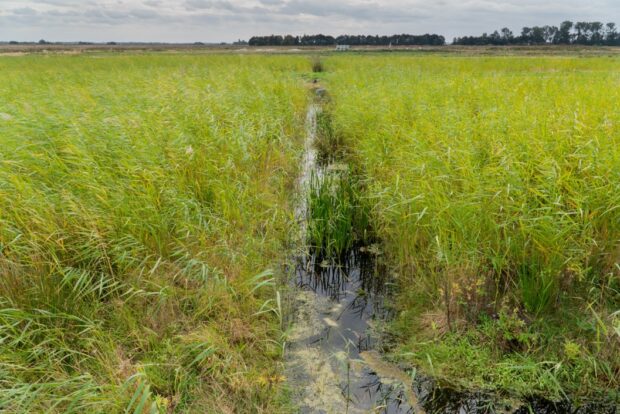
England is putting up to £10 million behind a practical idea that sounds almost backwards at first: keep lowland peat wetter, but keep some of it productive. Natural England's Paludiculture and Wetter Farming Fund will support projects testing crops, machinery and markets for farming on wet peat soils.
Information only
This article is for general information only. It is not farming advice, funding advice, legal advice, land-management advice, ecological consultancy or a recommendation to apply for any scheme. Grant rules, application windows, peatland evidence, market demand and site conditions can change, so check current official source material and qualified local advice before making project decisions.
Lowland peat is not remote wilderness. In England, it is often working land: flat fields, drainage ditches, pumps, vegetables, machinery and soil that has been made productive by keeping water away.
The trouble is that peat does not behave like ordinary mineral soil. Drain it, cultivate it and expose it to air for long enough, and the land itself starts to disappear. Natural England says drainage-based agriculture is degrading lowland peat, releasing carbon, accelerating land subsidence and damaging biodiversity.
The new fund does not ask every field to become a nature reserve. It asks a more practical question: can farmers grow useful crops and food while keeping peat wet enough to slow the damage?
Quick answer
| Question | Short answer |
|---|---|
| What changed? | Natural England launched the Paludiculture and Wetter Farming Fund on 26 June 2026, backed by up to £10 million from the Department for Environment, Food and Rural Affairs (Defra). |
| What will it fund? | Projects that develop markets for wetland crops such as reed, bulrush and sphagnum moss, and projects that test conventional food crops at higher water tables. |
| Why does lowland peat matter? | Natural England says lowland peat soils produce roughly 40% of England's domestically grown vegetables, while drainage-based farming can release carbon and cause land subsidence. |
| What is the good news? | The fund moves peat protection closer to farm business reality by testing crops, machinery, processing, certification and market routes. |
| What should not be overclaimed? | Funding trials are not proof of profitable markets, secured emissions cuts, restored ecosystems or offset-quality carbon outcomes. |
The number to remember
Progress number
Up to £10 million is available for paludiculture and wetter farming projects on lowland peat, with applications open from 26 June 2026 to 21 August 2026.
The amount is small beside the scale of English farming, but it is large enough to move the idea beyond a demonstration plot. The grant page says the scheme is designed to unlock barriers to paludiculture markets and wetter farming practices while maintaining profitable use of lowland peatland.
That is the important word: profitable. Wet peat farming will not spread because it sounds virtuous in a strategy document. It has to work in machinery, buyers, harvest windows, processing routes, certification, farm accounts and local water management.
That is why the crop list matters. The fund is not only paying people to think about wetter peat. It is focused on practical routes such as Phragmites reed, Typha bulrush and Sphagnum moss for products including horticultural peat replacement and acoustic panels, alongside food-production systems that may work at higher water tables.
What wet farming means
Paludiculture is farming on wet peatland. Instead of draining peat deeply so conventional crops can be grown on drier soil, paludiculture grows crops adapted to wet conditions.
Wetter farming is slightly different. It looks at whether more familiar food crops can be produced with higher water tables than conventional drained peat farming normally uses.
Those two routes solve different problems. Paludiculture needs crop markets that are still young: buyers for reed, bulrush, sphagnum and products made from them. Wetter farming starts closer to existing food markets, but has to prove that yields, machinery, crop quality and water control can work under wetter conditions.
Both routes matter because lowland peat has been pulled in opposite directions for years. It is valuable farmland, but its current drained state creates climate, soil and nature costs. A working wet-farming model would not remove that tension. It would give farmers more options than either drain harder or stop producing.
Why peat is difficult farmland
Peat is built from partly decomposed plants. When it stays wet, decomposition slows and carbon stays locked into the ground for longer. When it is drained, oxygen reaches the peat and the stored carbon can be released as greenhouse gases.
There is also a physical problem. As drained peat oxidises and compacts, land can subside. Fields become lower, drainage becomes more demanding and the same farming system can become harder to maintain.
That is why the story links to the wider England peatland restoration progress piece. Restoration is the clearer climate and nature route where land can be rewetted and recovered. Wet farming is a more commercial experiment: can some peatland stay in production while doing less damage?
What the fund has to prove
| Evidence needed | Why it matters | What would strengthen the case |
|---|---|---|
| Crop performance | Farmers need yields, quality and harvesting windows that work in real conditions. | Replicable results across more than one site, soil type and season. |
| Machinery and processing | Wet ground changes how crops are planted, harvested, dried, moved and stored. | Equipment and processing routes that do not rely on one-off grant support forever. |
| Market demand | Reed, bulrush and sphagnum need buyers and product standards, not only interesting trials. | Contracts, certification, repeat buyers and clearer value chains. |
| Water management | Keeping peat wetter is not the same as flooding a field and hoping for the best. | Evidence that higher water tables can be managed across seasons and neighbouring land. |
| Climate and nature outcomes | The climate case depends on slowing peat loss and reducing emissions, not only changing the crop. | Measured soil, water, emissions and biodiversity data over time. |
The fund is strongest where it keeps these questions together. A crop that grows well but has no buyer is not enough. A product with a buyer but no credible water-management route is not enough. A wetter system that cannot be maintained by real farms will remain a trial.
The optimistic version is more interesting than a simple nature restoration story. Lowland peat could become a place where climate risk, food production and new materials meet in one field.
The claim boundary
The £10 million fund is a positive step, not a finished answer.
It does not prove that paludiculture crops will become mainstream. It does not prove that conventional food production can simply carry on with wetter soils. It does not prove that farm incomes are protected, that emissions reductions are secured or that lowland peat is now on a safe path.
It also should not be read as a carbon-credit story. Keeping peat wet can support climate goals, but a funded trial is not a verified credit, a retired unit or a corporate offset. For that boundary, read the carbon removal credits guide and the UK Woodland Carbon Code progress article.
What it does show is a better direction for the question. England is no longer only asking how much peat can be restored away from production. It is also asking whether some productive peatland can change how production works.
Crops that can grow on wetter peat
England is funding farmers to grow crops on wetter peat because draining peat to farm it can make the land sink and release carbon.
That is concrete enough to picture. Reed, bulrush and sphagnum are not abstract climate tools. They are crops that could become insulation, growing media, panels or other materials if the market develops.
The wider lesson is not that wet farming has solved lowland peat. It is that climate progress sometimes looks less like abandoning old systems and more like changing the way they work. A farm can still be a farm, but the water table, crop, buyer and climate impact may all have to change.
What to watch next
- Which projects receive funding after the 21 August 2026 application window closes.
- Whether funded projects report crop yields, water-table management, machinery lessons and product routes in comparable ways.
- Whether wetland crop products secure repeat buyers beyond grant-funded trials.
- Whether food-production trials at higher water tables show credible yields and practical farm management.
- Whether future evidence links wetter farming to slower peat loss, lower greenhouse gas emissions and better biodiversity outcomes.
- Whether farmers see wet farming as an investable option rather than a niche conservation experiment.
The best outcome would be simple to describe and hard to deliver: peat stays wetter, farmers still have a business, and the land stops being treated as if productivity depends on draining it away.
Frequently asked questions
What is paludiculture?
Paludiculture means farming on wet peatland. In this fund, Natural England points to wet-adapted crops such as reed, bulrush and sphagnum moss.
What is wetter farming?
Wetter farming means trying to grow conventional food crops at higher water tables than normal drained peat farming. It is closer to existing food markets, but still has to prove it can work in real farm conditions.
Why not just restore all lowland peat?
Some peatland restoration is essential, but lowland peat is also important farmland. Natural England says lowland peat soils produce roughly 40% of England's domestically grown vegetables. Wet farming is an attempt to reduce the damage of drained systems while keeping some land productive.
Does this mean wet farming cuts emissions?
Not automatically. Higher water tables can slow peat degradation and may reduce greenhouse gas emissions from drained peat, but the result depends on site conditions, water management, crop choice and measurement over time.
Data checked
This article was checked on 8 July 2026 against Natural England's Paludiculture and Wetter Farming Fund update, the GOV.UK Find a Grant page for the fund, and the GOV.UK England Peat Action Plan. Review after funding awards are announced, after material changes to the application window or grant rules, or when funded projects publish crop, market, water-management or emissions evidence.
Useful source links
- Natural England: Paludiculture and Wetter Farming Fund
- GOV.UK Find a Grant: Paludiculture and Wetter Farming Fund
- GOV.UK: England Peat Action Plan
- National Audit Office: The Nature for Climate Fund
- Feature image source: Natural England blog, Great Fen Phragmites trial, image credit Jim Milner, Open Government Licence v3.0