
Earth Overshoot Day 2026: humanity is using nature 73% faster than it can regenerate
Earth Overshoot Day 2026 falls on 30 July, with humanity using nature 73% faster than ecosystems regenerate. See what the date means and why it moved.
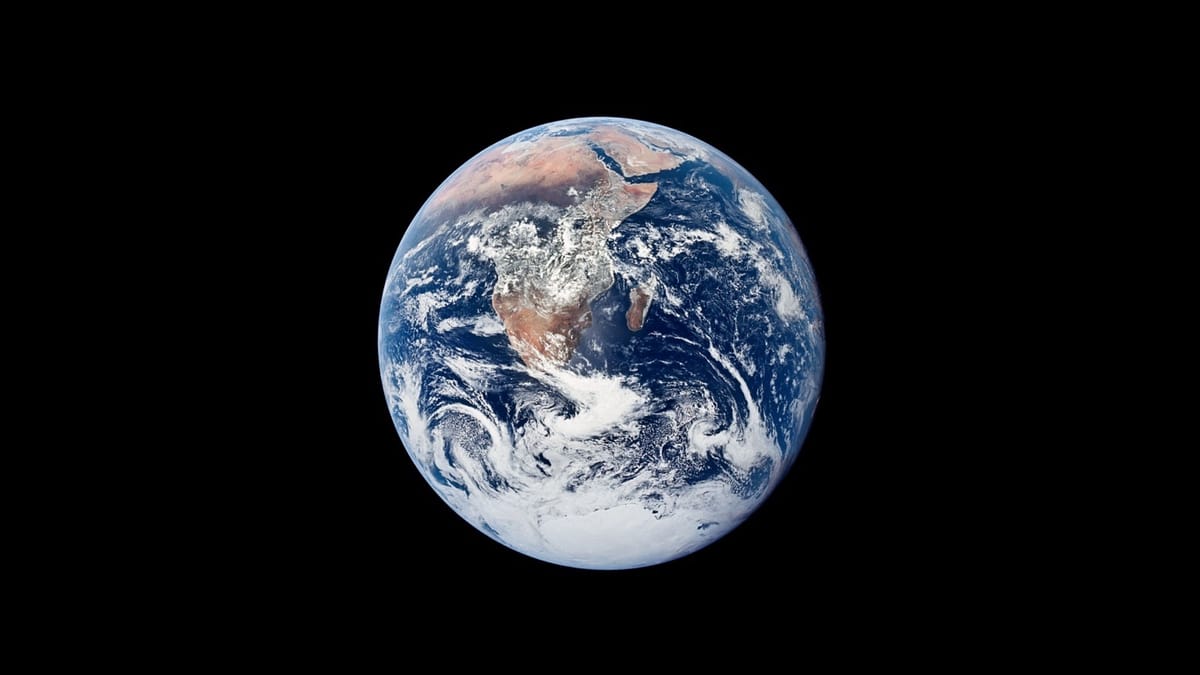
Earth Overshoot Day falls on 30 July in 2026. The date marks the point when humanity's demand for renewable ecological resources and services exceeds what Earth can regenerate in the year.
Global Footprint Network estimates that humanity is using nature 73% faster than ecosystems regenerate, equivalent to the resources of 1.73 Earths. The remaining 154 days of 2026 therefore represent ecological overshoot: demand met by depleting natural capital and allowing carbon dioxide to accumulate in the atmosphere.
The date is six days later than the estimate published for 2025. That sounds encouraging, but it does not show that ecological pressure has eased. Most of the movement comes from revised data, particularly a higher estimate of how much carbon the oceans absorb.
Earth Overshoot Day 2026 in three numbers
| Measure | 2026 estimate | What it means |
|---|---|---|
| Global date | 30 July | Human demand exceeds the planet's estimated annual regenerative capacity after 211 days. |
| Ecological demand | 1.73 Earths | Resources and ecological services are being used 73% faster than Earth can renew them. |
| Carbon share | 61% | Carbon emissions from burning fossil fuels form the largest part of humanity's measured Ecological Footprint. |
Earth Overshoot Day does not mean that every forest, fish stock or supply of food suddenly runs out on 30 July. It compares annual human demand with the biologically productive area available to provide resources and absorb waste, using a common accounting framework.
Why the later date is not an improvement
Earth Overshoot Day fell on 24 July in the estimate published for 2025. The 2026 date is 30 July, but the six-day difference combines two movements in opposite directions.
| Source of change | Effect on the date | Interpretation |
|---|---|---|
| Updated data and accounting revisions | Eight days later | A higher estimate of ocean carbon absorption, together with smaller revisions, changed the calculated historical position. |
| Changes in consumption and biocapacity | Two days earlier | The gap between humanity's footprint and global biocapacity widened over the latest year. |
| Net change in the published date | Six days later | The apparent improvement is a revision effect, while the underlying annual movement went in the opposite direction. |
Historical comparisons are most reliable when every year is recalculated using the same edition of the accounts. Comparing dates announced in different years can mix genuine change with revisions to source data and methodology.
Global Footprint Network says 2026 still represents the highest level of global overshoot in the series. It estimates that deficits accumulated since global overshoot began in the early 1970s now amount to 20.6 years of Earth's biological productivity, although not all of that ecological damage can be reversed.
How Earth Overshoot Day is calculated
The calculation divides Earth's biocapacity by humanity's Ecological Footprint, then multiplies the result by the number of days in the year:
The calculation
Earth's biocapacity ÷ humanity's Ecological Footprint × 365 days
Biocapacity is the capacity of biologically productive land and water to generate renewable resources and absorb waste. The Ecological Footprint adds competing demands for cropland, grazing land, fishing grounds, forest products, built infrastructure and the area needed to absorb carbon dioxide emissions that oceans do not take up.
The current-year figure is necessarily an estimate. The 2026 calculation uses the latest National Footprint and Biocapacity Accounts, which contain complete datasets through 2023, estimates for 2024 and 2025, and a 2026 nowcast built from preliminary data and extrapolation. More recent evidence from sources including the Global Carbon Project and the International Energy Agency is added where possible.
York University's Ecological Footprint Initiative produces the accounts for the Footprint Data Foundation. Global Footprint Network uses them to calculate and communicate the annual date.
What the date can and cannot show
The calculation brings several kinds of ecological demand into one measure. That gives it a global scale and a long historical series, but it also compresses substantial differences between resources, ecosystems and countries.
The date can show whether aggregate demand sits within or beyond estimated global regeneration. It cannot show that every resource is under the same pressure, identify where damage falls, or measure all environmental problems. Water scarcity, toxic pollution and the loss of a particular species may require separate local or specialist evidence.
The large carbon component also means that changes in fossil-fuel emissions and estimates of carbon absorption have a major influence on the result. That connection is real, but Earth Overshoot Day is wider than a carbon budget. It includes biological resources used for food, fibres, timber and infrastructure as well.
Country Overshoot Days answer a different question
A country Overshoot Day asks when the global date would fall if everyone consumed at the average level of people in that country. It is a hypothetical comparison, not the day when the country exhausts its own domestic resources.
| Geography | 2026 country Overshoot Day | Earths needed at that consumption level |
|---|---|---|
| US | 14 March | 5.1 |
| EU | 3 May | About 3.0 |
| UK | 22 May | 2.6 |
| Global | 30 July | 1.73 |
The country dates use the 2025 edition of the accounts and generally describe each country's 2024 position. The global date uses a newer 2026 edition and a current-year nowcast. They are useful side by side as measures of consumption scale, but they are not one perfectly aligned dataset.
Some countries have no Overshoot Day because their per-person footprint is below global per-person biocapacity. That does not prove that all activity inside those countries is sustainable, only that the average consumption measure remains below the global threshold used for this calculation.
Where household choices fit
Earth Overshoot Day is shaped mainly by energy systems, transport, food production and the materials economy. Household purchases cannot replace changes in those systems, but they can reduce avoidable demand when they help an item last longer, displace a disposable product or make better use of resources already available.
For practical comparisons, see TPB's guides to reusable water bottles, choosing a compost bin and water-butt sizing and installation. Each starts with whether buying the product solves a real problem, rather than treating a sustainability label as sufficient reason to purchase it.
Carbon emissions offer the largest single lever
Global Footprint Network estimates that halving carbon dioxide emissions from fossil fuels would move Earth Overshoot Day by about three months. That is a modelled scenario rather than a forecast, but it shows why the carbon component dominates the available movement.
The energy transition is already changing the power system. Renewable generation is expected to overtake coal globally in 2026, and 692 gigawatts of renewable capacity was added during 2025. Yet the International Energy Agency still expects power-sector emissions to rise this year because electricity demand is growing quickly and coal generation remains substantial. Our reviews of global electricity demand and renewable capacity progress examine that tension in the latest energy data.
Land and carbon absorption matter too. The new GHG Protocol Land Sector and Removals Standard is one attempt to improve how companies account for land emissions and qualifying removals. Carbon credits can finance reductions or removals, but our carbon offsetting guide explains why buying and retiring a credit does not erase the original emission.
The next data check
The next annual announcement will provide a new headline date, but the more important evidence will sit underneath it. Changes to the National Footprint and Biocapacity Accounts, especially estimates of ocean carbon absorption, can move the historical series. Consumption, fossil-fuel emissions and biological productivity determine the real-world direction within a consistent edition.
The 2027 comparison should therefore separate those effects again. A genuinely later date would require the consistently calculated footprint to fall relative to biocapacity, rather than the calendar changing mainly because the accounting inputs were revised.
Have a correction, source update or question about the calculation? Email hello@theplanetbrief.com.
Official sources
- Global Footprint Network: Earth Overshoot Day 2026 falls on 30 July
- Global Footprint Network: how Earth Overshoot Day 2026 was calculated
- Global Footprint Network: Country Overshoot Days 2026
- Footprint Data Platform: National Footprint and Biocapacity Accounts
- York University Ecological Footprint Initiative
- Feature image: Blue Marble photographed by the Apollo 17 crew, public domain
Data checked
Checked 30 July 2026 against Global Footprint Network's 2026 announcement, calculation note, country tables and Footprint Data Platform. The global date is a current-year estimate using complete account data through 2023, estimates for 2024 and 2025, and a 2026 nowcast. Country dates generally reflect 2024 consumption using the 2025 accounts edition. Review after any revision to the 2026 calculation, the next National Footprint and Biocapacity Accounts edition or the 2027 announcement.
Know this subject well? Send evidence, corrections or a useful lead to hello@theplanetbrief.com.